 Industrial transformation (IX) is no longer optional. Transformation has been mainstream in manufacturing for years now. Yet, as manufacturers race to modernize, a stark divide has emerged: a minority of companies are pulling away as true IX Tech Leaders, while the majority fall behind as hesitant followers. Our research reveals a powerful truth: this divide isn’t driven by access to technology but by mindset, execution, and strategic clarity.
Key Differentiators of IX Tech Leaders
-
Bold Tech Deployment with Business Context
IX Tech Leaders don’t just adopt new technology—they scale it with purpose. These firms link every implementation to a clear operational or strategic value driver. They avoid the “pilot trap” by moving quickly from experimentation to enterprise-wide impact. Their success is built on a simple yet radical idea: technology must be a means to strategic advantage, not a siloed initiative. As a result, Leaders are over 2.5x more likely to be early adopters of Industrial AI than followers.
Leaders move rapidly from pilot to enterprise-wide scaling, while many followers remain trapped at the pilot stage, essentially two steps behind the leaders.
Mercedes-Benz is a case in point. Mercedes, a World's Most Productive Company™ in the LNS Research Industrial Productivity Index, has shown accelerating tech adoption over a long period of time in its value chain. Mercedes began its transformation in 2000 with the adoption of the Toyota Production System as the Operating Model, the foundation for a focus on safety, quality, delivery, and cost. Over time, they adapted the operating model to their own unique business situation by adopting technology, specifically Factory 56, a state-of-the-art manufacturing facility.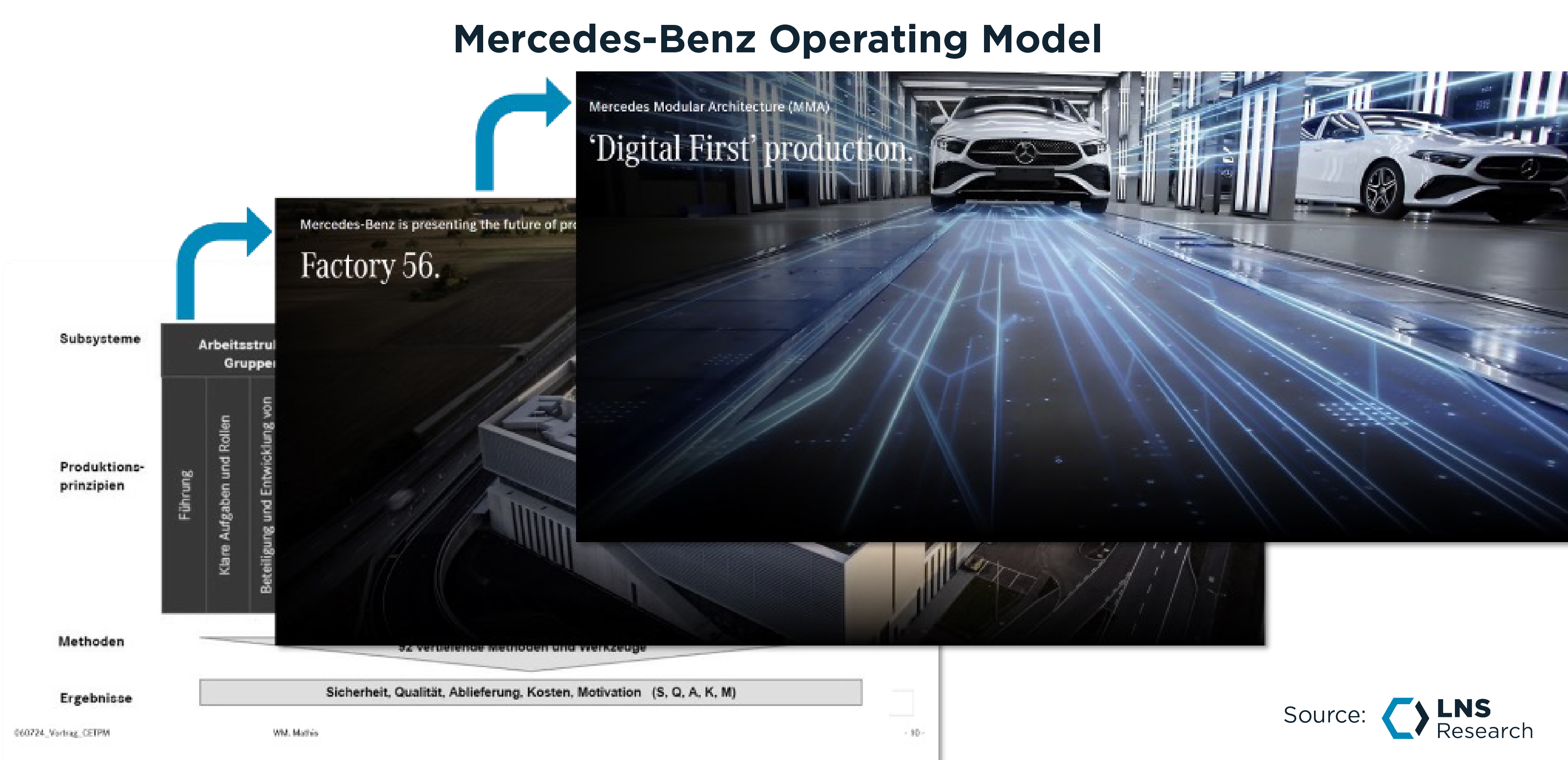
Figure 1: M-B Adapted Operating Model
Over time, Mercedes has integrated additional technology into its operating model, known as the “digital-first value chain” (Figure 1), enabling it to fully simulate new products, production facilities, and supply chain launches virtually. This integration of TPS with advanced technology allows Mercedes-Benz to optimize operations and continuously improve, making its system uniquely suited to its needs.
-
Leader Adoption of AI: Building a Strategic Edge
Artificial Intelligence (AI) is the current litmus test for tech maturity; you can only scale AI successfully if you have already addressed many other key foundational areas, including data, culture, trust, automation, and leadership. Leaders are far ahead in these areas. They're not waiting for perfect conditions; they're building readiness and institutional muscle now.
-
-
-
Aggressive Implementation: 34% of IX leaders report enterprise-level AI implementation as of 2025, up from 30% in 2023. These aren’t isolated pilots; they span predictive maintenance, quality, analytics, and optimization.
-
Industrial AI at Scale: 53% of leaders already deploy Industrial AI across multiple use cases, and 34% are actively piloting it (Figure 2). This ensures continuous value capture and operational refinement. Followers are bifurcated between those who experiment and those who have no plans.
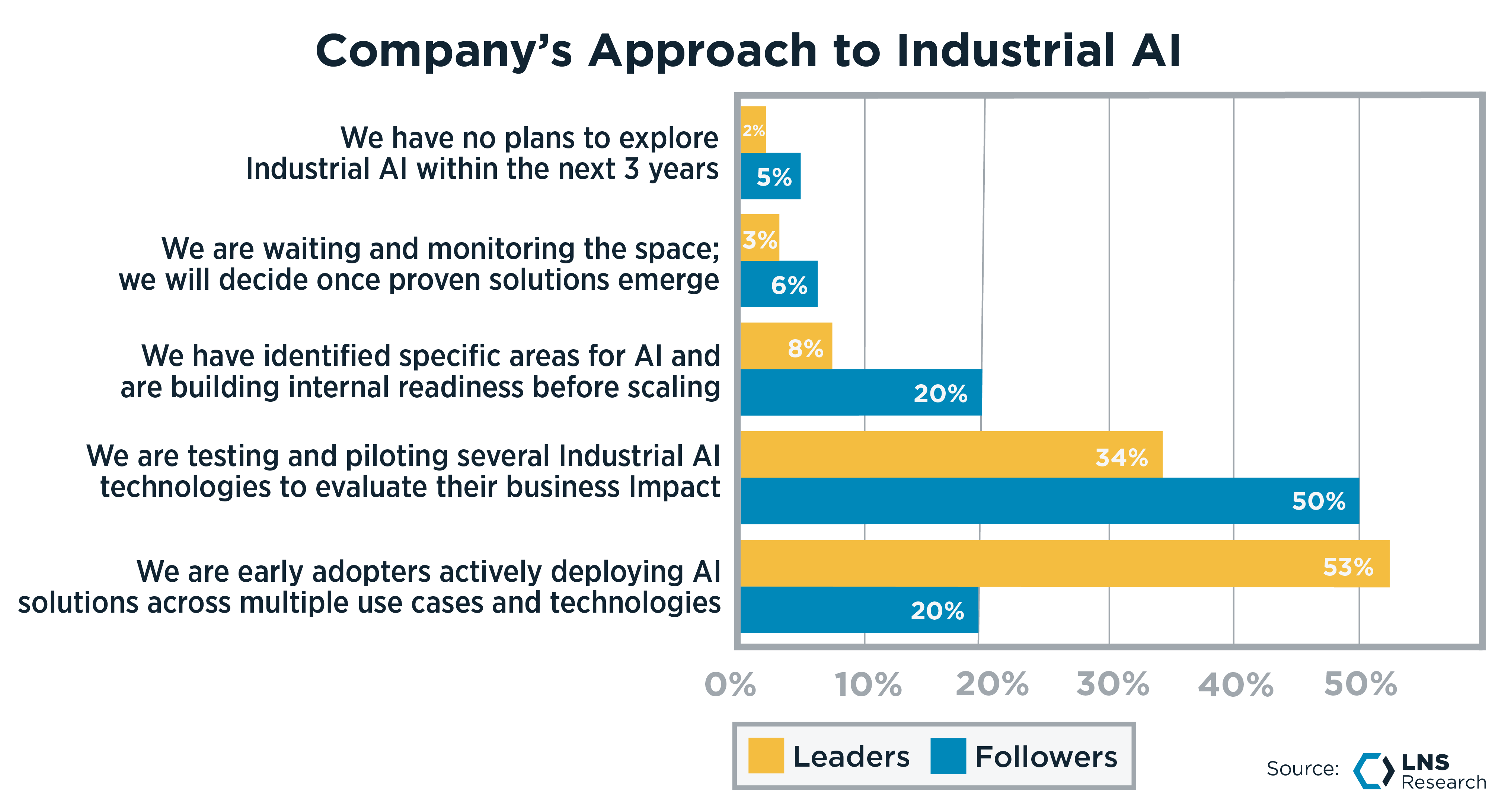 Figure 2: Leaders scaling Industrial AI
Followers, in contrast, are stuck in wait-and-see mode. By the time they move, leaders will have already institutionalized AI-driven decision-making and captured the compounding advantages of proprietary data and frontline adoption.
-
Trust in Autonomous Inspection: The Next Frontier of Differentiation
One emerging signal of digital maturity is how organizations view and trust autonomous inspection technologies. Leaders are shifting from human-dependent inspection models to AI-powered, closed-loop inspection systems that detect, assess, and respond to quality deviations in real-time.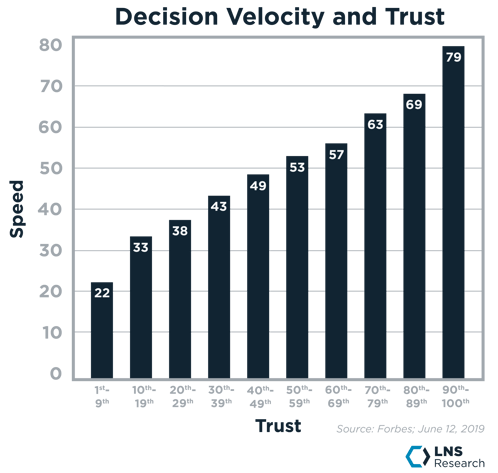
Figure 3: Trust is a Differentiator in Decision Velocity
-
-
-
Trust as a Differentiator: 44% of leaders say they trust autonomous inspection to make accurate decisions without manual oversight, compared to just 16% of followers, over 2.3 times more. This trust stems from consistent data accuracy, proven use cases, and a culture that values machine learning as a co-pilot, not a threat. (Figure 3)
-
Followers Lag in Confidence: In contrast, followers often resist autonomous inspection due to fear of false negatives, perceived complexity, or lack of transparency. Their inspection processes remain highly manual, reactive, and siloed.
-
Cultural Buy-In Matters: Leaders have earned organizational trust in autonomous technologies by involving frontline teams early, rigorously validating system performance, and integrating feedback loops. Followers who skip these steps face resistance and limited deployment.
Autonomous inspection is more than a technical capability—it’s a signal of cultural readiness to relinquish legacy control models. At our IX Event in October 2025, a keynote speaker had the quote of the event, “many would rather trust a person who is right 70% of the time, than a machine that is right 80% of the time.” This sentiment underscores the importance of intentional trust-building and setting realistic expectations for what advanced technology can achieve in industrial operations. Many are betting on cost savings through efficiency gains and headcount reduction as a result of advanced technology adoption. However, Leaders are betting on automation to raise the ceiling on speed, accuracy, and responsiveness. Followers, anchored in manual verification, risk falling further behind as quality becomes a real-time competitive advantage.
-
Scaled Innovation Capacity
Leaders innovate at scale, not in isolation. While followers dabble in one-off projects, leaders execute a portfolio of transformation initiatives—from sustainability programs to digital thread deployments. This insight is not new here at LNS Research. Our past research on Transformation Readiness, as well as across other domains, has shown the tendency of leaders to adopt more initiatives. We call this “The Power of More” (Figure 4). Some data to illustrate the point:
-
-
-
Nearly half of leaders are executing sustainability initiatives versus just a quarter of followers.
-
Leaders deploy enterprise-wide systems, while followers remain stuck in pilots.
-
Leaders are more than FOUR times more likely to be engaged actively across sixteen different sub-initiatives, compared to followers.
-
Leaders are more than TWICE as likely to engage in Knowledge Management, Embedded Quality and EHS, Integrated Operational Excellence, and Digital Thread initiatives, compared to followers.
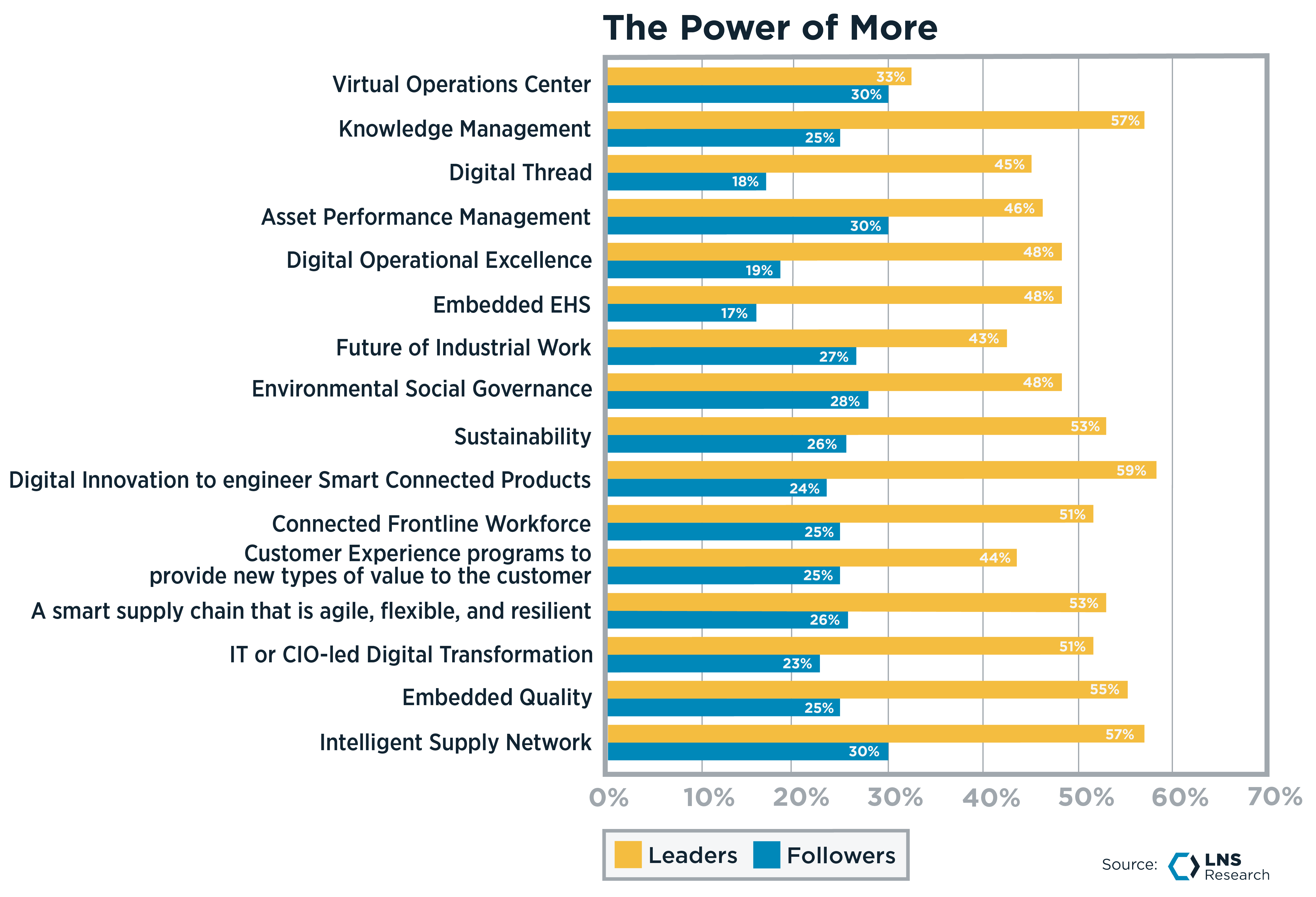
Figure 4: Example of The Power of More in IX Tech
Transformation Is a Strategic Choice, Not a Tech Problem
The key insight from our research is that industrial leaders aren’t winning because they have found a better piece of software. They’re winning because they lead differently. They reframe transformation as a business strategy, not a tech project. They anchor their initiatives to customer value, trust their data, build trust in themselves, and empower teams to own the future.
A Playbook for properly leveraging technology to support industrial transformation
-
-
-
Set a Strategic North Star. Anchor digital initiatives to clear business outcomes.
-
Invest with Intent. Fund transformation like a core business priority, not a side project.
-
Earn Cultural Buy-In. Engage frontline teams early and communicate consistently.
-
Build Data Infrastructure. Embed metrics into daily operations and management reviews.
-
Scale What Works. Use early successes to build momentum for enterprise-wide adoption.
Final Thought: Mindset Determines Trajectory
The divide between IX Leaders and Followers isn’t inevitable; it’s a choice. What separates the best from the rest is a leadership mindset that prioritizes impact over inertia. The companies shaping the future of manufacturing aren’t waiting to get lucky with technology. They’re making deliberate moves to lead. Will you?