The Hidden Cost of Compliance
The journey of quality in manufacturing often follows a cycle (Figure 1). At first, organizations benefit from centralized leadership that brings strategic clarity, cultural cohesion, and cross-functional alignment. Over time, as maturity appears to be achieved, quality responsibilities become decentralized. The belief that “quality is everyone’s job” takes hold. While well-intentioned, this perception can create confusion, weaken accountability, and dilute the vision. As leadership roles are removed or minimized, compliance efforts reassert themselves as dominant, and organizations find themselves in a state of reactive quality management. Inevitably, then, the cycle starts over again with a market-affecting event.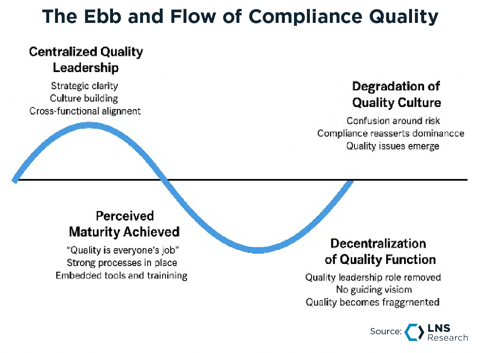
Figure 1: The Ebb and Flow of Compliance Quality
Today, quality compliance is consuming up to five percent of total company revenue while contributing zero percent to revenue growth (Figure 2). This stands in contrast to functions like sales and product development, which generate measurable returns on investment. Quality compliance, in its current form, is not delivering value. Instead, it functions as a bureaucratic expense that often fails to prevent the very risks it was meant to contain. This imbalance reflects a deeper issue: compliance has been designed as a safeguard rather than a growth enabler.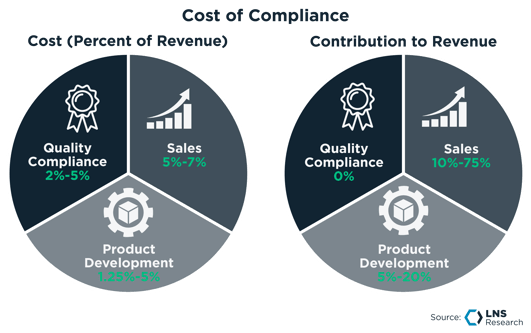
Figure 2: Compliance is a cost avoidance game
A shift is now underway. Rather than refining outdated systems, forward-looking manufacturers are embedding intelligence into their quality operations, ensuring compliance happens by design. Artificial intelligence is being used not simply to automate tasks but to re-architect quality as a capability that delivers trust, speed, and strategic advantage.
From Quality Policing to Intelligent Performance
Traditional compliance systems are grounded in documentation, audits, and departmental oversight. These models emerged from an era where manufacturing data was sparse, equipment was analog, and workforce roles were repetitive and narrowly defined. In that environment, quality was treated as a post-process control step, bolted onto production lines and enforced by compliance specialists.
In modern manufacturing, however, speed, complexity, and interconnectivity dominate. Static compliance frameworks are too slow and too disconnected to provide protection or confidence. Companies in the forefront have realized that compliance needs to be embedded in the workflow itself. When quality is designed into the system, compliance becomes automatic, rather than a resource drain.
This perspective embodies the ethos of Embedded Quality (Figure 3). Rather than operating from a stance of enforcement, quality becomes a proactive force aligned with customer value, operational performance, and enterprise trust. It influences design, guides decisions, and ensures that compliance emerges naturally from high-functioning systems.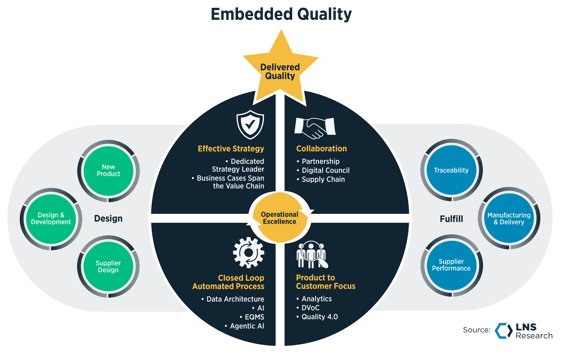
Figure 3: Quality is designed into the embedded quality approach
The True Burden of Legacy Compliance
Evidence from our research on Embedded Quality shows that nearly half of Quality strategies focus solely on internal process efficiency and fail to align with broader business goals. These business cases fail to gain alignment and support in the C-suite. Nearly 70 percent of transformation initiatives in this space do not succeed, in part because quality leaders remain focused on audit preparation instead of delivering value. These structural weaknesses play out in real-world consequences. Product recalls have risen steadily for the last six years (Figure 4).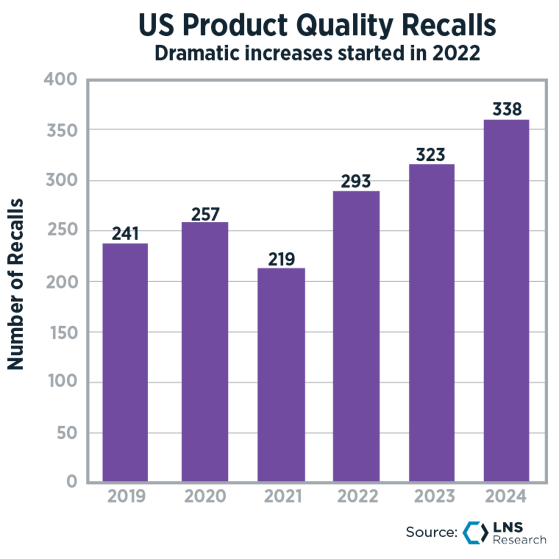
Figure 4: Compliance-based quality approaches are failing the customer
The consequence of clinging to legacy compliance models is that organizations pay a heavy price for activities that slow innovation and delay decision-making. Every manual audit, every disconnected system, every spreadsheet-based workflow takes time and attention away from the pursuit of delivered quality and customer trust. The problem is not simply inefficiency. It is strategic exposure. When compliance fails, the result is not only rework and cost, but also brand damage, customer loss, and regulatory scrutiny.
The New Architecture: AI-Powered Embedded Compliance
The next generation of compliance systems is not built around oversight. It is built around intelligence. By integrating AI and data into the core of connected enterprise systems, organizations are turning compliance into a seamless outcome of day-to-day execution. This new architecture includes:
-
-
-
Prognostic Quality Analytics: Identifies potential non-conformances before they occur using real-time signals from manufacturing, supplier, and process data. These models anticipate failure modes and quality risks, reducing inspection burden and catching issues at the earliest point of detection.
-
Digital Voice of the Customer (Figure 5): Combines warranty claims, field service reports, social sentiment, and complaint data with in-house production data to deliver early warning signals. These insights are integrated into the quality system so that customer impact is reflected directly in risk assessment, root cause analysis, and CAPA prioritization.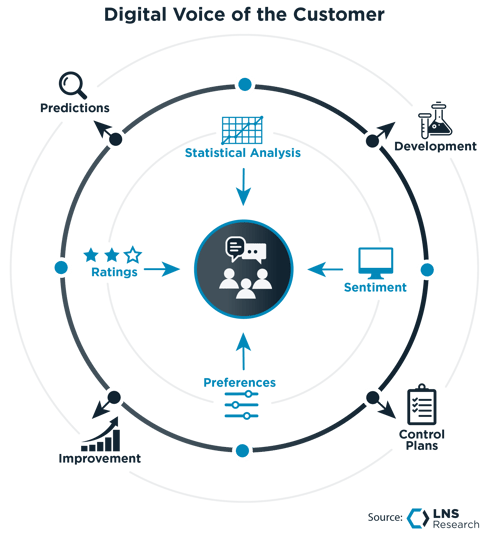
Figure 5: DVoC reveals customer preferences
-
-
-
Closed-Loop Automation: Connects detection to resolution by automatically initiating corrective and preventive workflows. These workflows engage the right teams across product development, production, and operations, eliminating handoffs and delays that typically stall compliance actions.
-
Quality Data Architecture: Provides the foundation of clean, contextualized, and connected data that powers traceability, validation, and automated insights. It supports seamless integration of inputs from design, supplier management, production records, and customer returns.
-
Industrial AI: Uses machine learning and operational data to deliver site-specific and product-specific recommendations. These models adapt dynamically to changing production conditions, providing engineers and operators with actionable guidance to prevent quality issues before they occur.
-
Edge Analytics: Enables shop-floor decision-making through local data processing and real-time alerts. These systems empower frontline teams to act quickly and autonomously, reducing the time to actionable insight.
-
Enterprise Quality Management Software (Figure 6): Connects design, sourcing, production, delivery, and customer feedback into a seamless, closed-loop quality system..png?width=465&height=506&name=2023%20Enterprise%20Quality%20Management%20Software%20(EQMS).png)
Figure 6: EQMS Capabilities
Together, these components allow quality to function as a live, learning system. Compliance no longer slows down production. It accelerates confidence.
Scaling Success: Use Cases from the Field
Several global manufacturers are already building this vision into reality. In one case, a large contract manufacturer with over 100 production sites consolidated hundreds of disconnected quality tools into a single, unified platform. Over 200,000 users now interact with a harmonized system where AI handles document drafting, translation, regulation monitoring, and quality agreement reviews. Compliance, once a bottleneck, now operates in the background.
Elsewhere, a multinational pharmaceutical manufacturer's quality team replaced 37 fragmented workflows with a unified, AI-supported process framework. Intelligent agents were used to summarize documents, align procedures with current standards, and manage jurisdictional variations. What started as a simplification effort became the foundation for a new model of costless compliance.
Field operators are also seeing change. Voice-enabled AI tools now allow workers to record quality events hands-free. These tools initiate records, classify issues, suggest root causes, and trigger remediation steps, all in real time. The result is not just efficiency. It is resilience.
Quantifying the Shift
-
-
-
Leaders in deploying technology trust autonomous inspection and reporting FOUR times more than followers. Leaders report feeling empowered by this technology, whereas followers report skepticism and distrust.
-
77% of quality leaders report active use of AI to accelerate deviation resolution and reduce inspection cycle times.
-
Quality leaders report 29% higher throughput, 23% higher margins, and 20% more successful product launches.
-
Quality leaders report 26 times fewer defects than followers who are still adhering to the compliance approach.
Conclusion: From Burden to Enabler
The traditional model of compliance is not only outdated but misaligned with today’s needs. It is expensive, reactive, and fails to support innovation or trust. Embedded Quality, powered by AI, offers a different future. In this model, compliance becomes a feature of the system, not a responsibility of a department. It is the byproduct rather than the focus.
Recommendations for Chief Quality Officers
-
-
-
Redefine compliance as an expectation, not a mission. Embed it directly into your operating model so that it disappears from to-do lists and emerges as a system behavior.
-
Make your Quality Data Architecture a competitive asset. Invest in connected, contextualized, and clean data that powers AI and reveals compliance gaps before they become failures.
-
Tie every quality initiative to Delivered Quality outcomes. Move the conversation from audit readiness to product velocity, margin lift, and customer retention.
-
Win finance by showing how quality protects enterprise value. Build the case with clear metrics that show how Embedded Quality reduces risk exposure, lowers hidden costs, and accelerates decision velocity.