The real crisis in quality today is not simply about reducing defects. It is about breaking free from a compliance trap that absorbs costs but delivers no measurable value to the business. Quality compliance activities consume up to five percent of revenue, yet contribute nothing directly to revenue generation (Figure 1). By contrast, functions like sales and product development both cost less and return significantly more when aligned to strategy. As companies decentralize quality leadership in pursuit of efficiency or cultural maturity, they often fall into a hidden decline. Without a central vision, quality becomes fragmented, risk understanding diminishes, and compliance quietly reasserts control. This erosion of purpose leads organizations to invest in processes that no longer serve the customer or the business. The result is a hollowed-out function, evident in cost reports but invisible in terms of value creation.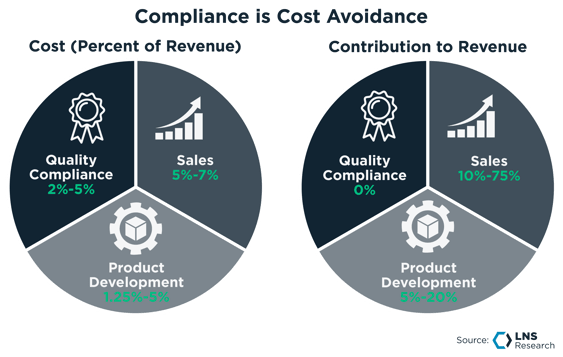
Figure 1: Compliance delivers zero growth
The Problem Everyone Knows, But Few Can Quantify
The traditional Cost of Quality (CoQ) approaches, whether it is an Economic Conformance Model or Quality is Free Model (Figure 2), enshrines the reactive, cost prevention mindset that compliance-focused quality organizations are often shackled to. In a world where customer expectations grow faster than product cycles and competitors move at the speed of algorithms, legacy Cost of Quality frameworks cannot keep pace. Customers do not care about compliance checklists. They care about Delivered Quality, the experience they can see and feel. And yet, most organizations still measure quality through a narrow, backwards-looking lens.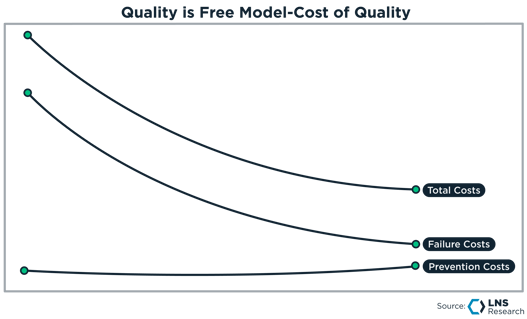
Figure 2: Quality is Free Model
At leading companies like Pella, an LNS Research client, executive leaders support building a comprehensive view of all-in Cost of Poor Quality. Finance teams are not always aligned with this approach. The disconnect stems from a framework that was never designed to quantify what matters in today's competitive environment.
Speaking at the LNS Research Industrial Transformation IX Event in October 2025, a senior executive from Pella shared the impact that their AI strategy has had on traditional levers of cost of quality, such as reducing defects, time to competency for new employees, and improved equipment reliability.
The Hard Truth Behind Legacy Thinking
Our research here at LNS Research, as well as various studies conducted over decades on the subject, estimate that the true Cost of Poor Quality can reach 20 percent of revenue once hidden costs are included. These costs often go unnoticed in traditional financial reporting and include:
-
-
-
 Customer churn and the loss of lifetime value
-
Delayed product launches due to poor knowledge transfer
-
Slow decision-making caused by low organizational trust
-
Missed sustainability goals due to avoidable waste and inefficiencies
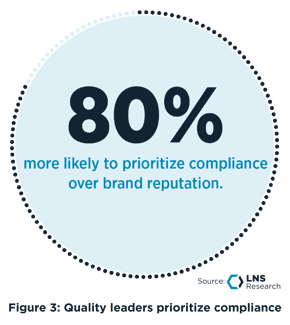
Even with this state of play, 80 percent of quality functions still emphasize compliance over brand reputation (Figure 3).
The Cost of Doing Nothing Is Growing
Quality teams that cling to outdated CoQ methodologies risk far more than inefficient operations. They risk strategic irrelevance. Consider the reputational damage experienced by brands like Boeing, where a culture of engineering excellence was replaced with one of cost management without a lens into the impact of those cost-based decisions. Failures, such as those experienced by Boeing, were not just technical. They exposed how thin the margin is between operational excellence and full-blown brand collapse. The reputational harm the Boeing brand experienced (and continues to experience) is massive compared to the savings realized by the shortcuts taken in the interest of cost management. The financial impact to Boeing was around $1 billion in losses per month for every month in 2024.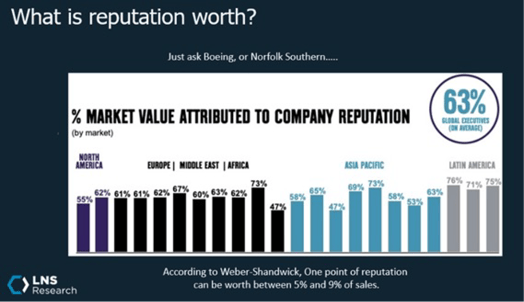
Figure 4: Reputation equals market value
How many quality issues are buried in siloed data? How many customer defections go untracked? How many decisions are delayed because the correct data is inaccessible or untrusted?
These are the real costs that are not always reflected in the general ledger (Figure 4).
A Smarter Framework for a Smarter Era
Leading manufacturers are adopting a new mindset. They treat Cost of Quality as a decision architecture rather than an accounting exercise. This means integrating data from across the value chain and using it to make faster, smarter choices.
They are deploying frameworks built on Quality Data Architectures that collect and contextualize data from suppliers, design, manufacturing, and customers. These platforms apply advanced analytics to identify risks, predict outcomes, and align investments to customer value.
Leading companies, such as Unilever and Kimberly-Clark, have developed AI-driven Digital Voice of the Customer initiatives (Figure 5) to integrate the customer's perspective into their value chains, enhancing the value of their products and streamlining business operations. A senior executive from Unilever presented at the LNS Research Industrial Transformation IX Event in October of this year, discussing the value Unilever has realized from this initiative, including improved product design that has resulted in better-quality products delivered to customers.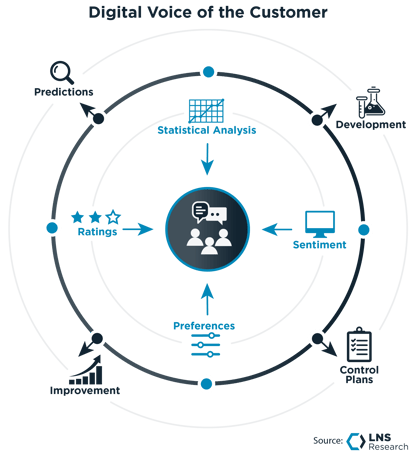
Figure 5: DVoC is a key lever for reducing Cost of Poor Quality
Quality leaders focused on delivered quality outcomes are reporting significant operational advantages:
-
-
-
29 percent higher throughput
-
23 percent higher net profit margin
-
20 percent higher new product success rate
-
26x fewer defects
Technologies Enabling a Prognostic Cost of Quality Framework
-
-
-
Quality Data Architecture (QDA): Acts as the foundational layer that connects, organizes, and contextualizes data across the value chain. It enables interoperability between siloed systems, ensuring that data can flow securely and meaningfully from suppliers to customers. Some to consider here are Siemens, Dassault Systemes, and Schneider Electric.
-
Enterprise Quality Management Software (EQMS): Serves as the process engine for quality workflows. Modern EQMS platforms support closed-loop processes that trigger actions based on real-time quality events, ensuring faster containment, root cause analysis, and preventive actions. Some EQMS that combine these capabilities with other things in this list include: Intellect, ComplianceQuest, and MasterControl.-1.png?width=412&height=448&name=2023%20Enterprise%20Quality%20Management%20Software%20(EQMS)-1.png)
Figure 6: Enterprise Quality Management Software (EQMS)
-
Advanced Industrial Analytics: Provides the modeling and simulation capabilities to detect quality risks early, forecast failure patterns, and prioritize actions based on risk and value. This includes statistical modeling, machine learning, and multivariate analysis. Seeq, Acerta Analytics, and Oden Technologies are leaders in the predictive analytics space for quality.
-
Predictive, Prescriptive, and Prognostic AI Models: Move beyond traditional reporting to generate forward-looking insights based on prognostic data models. Predictive models anticipate quality escapes or customer dissatisfaction. Prescriptive models recommend optimal corrective or preventive actions based on scenario simulation. There is a wide variety of players here, and the number is growing every day.
-
Digital Voice of the Customer (DVoC): Capture and analyze customer feedback from both structured and unstructured sources, including reviews, support tickets, warranty claims, and IoT-connected product usage data. This helps quantify the cost of reputation and silent churn.
Together, these technologies transform CoQ from a backward-looking accounting mechanism into a prognostic system capable of guiding decisions, preventing failure, and aligning operations with customer expectations and enterprise value creation.
Recommendations for Chief Quality Officers to make Cost of Quality relevant
-
-
-
Build a Quality Data Architecture
Unify data across design, supply chain, manufacturing, and customer service. A connected data architecture enables more responsive and informed decisions at every level of the organization.
- Deploy an AI-Enabled Cost of Quality Model
Leverage predictive and prescriptive analytics to surface risks early and quantify potential value loss. Intelligent frameworks shift quality from a reactive to a proactive approach.
- Gain Buy-In by Demonstrating Business Value
Use a transparent and evidence-based model to demonstrate how the All-in Cost of Quality impacts profitability, brand strength, and customer retention.
- Make Delivered Quality the Strategic Focus
Elevate quality from defect management to customer experience delivery. Companies that lead with Delivered Quality differentiate themselves in markets where trust is scarce.
When Cost of Quality is reimagined through the lens of intelligent architecture and predictive insight, it becomes an intelligent decision framework rather than an outdated reporting mechanism. The future of quality is not compliance. The future is intelligent, predictive, and deeply aligned to what the customer values most.
Additional Reading:
https://blog.lnsresearch.com/cost-of-quality-in-the-digital-age
https://blog.lnsresearch.com/prognostic-quality-leads-to-reimagined-cost-of-quality
https://blog.lnsresearch.com/bid/154524/cost-of-quality-metric-the-formulation-management-conundrum
https://blog.lnsresearch.com/bid/124741/cost-of-quality-definition