The ground has shifted under ESG and DEI-based programs with declining emphasis from regulators and investors. Programs that protect workers, increase product trust, and provide visibility into the environmental footprint of a product are emerging and building momentum for investment in the C-Suite.
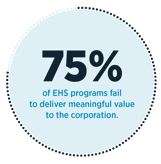
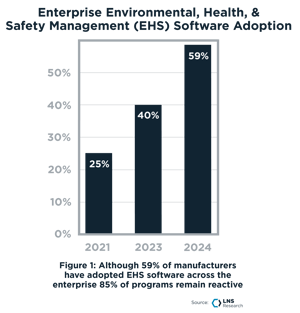 So far, executives have responded to rising risks with new safety initiatives, compliance programs, or technologies (Figure 1). While 59% of manufacturers have already scaled EHS software across the enterprise, 85% feel efforts remain reactive, and 75% of programs don’t deliver meaningful value to the corporation.
The truth is, most companies are failing at Embedded EHS, not because it doesn’t work, but because they are missing the critical success factors required to embed it into their operating model. CSOs and Global Heads of EHS who aren’t able to pivot will miss the critical need to better protect employees, transform the EHS function, and deliver long-term corporate value.
Why Companies Are Failing at Embedded EHS
 For decades, a ‘safety first’ approach created order and reduced injuries by framing compliance as the license to operate. As digital transformation and skills gaps increase, rising incident rates across the industry prove that traditional practices are inadequate (Figure 2). Most failures stem not from lack of effort but from antiquated approaches inadequate to level up inexperienced workers who don’t have the deep reservoir of tacit knowledge from years of experience.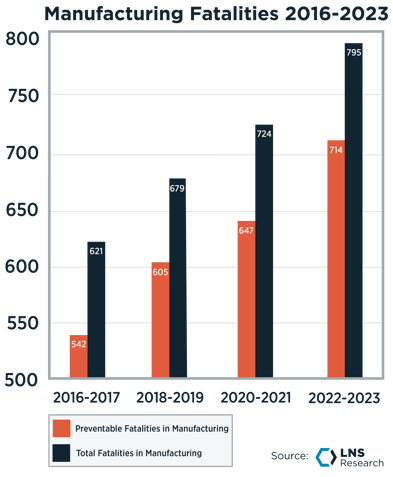
Figure 2: Significant Injuries and Fatalities (SIFs) have spiked since 2018
The three most common reasons traditional EHS management is failing companies are:
-
Clinging to a Compliance-centric mindset. Too many industrials still position EHS as a function focused on enforcement, audits, and reporting. Most underestimate the role of leadership and culture, or are unable to shift mindsets, with EHS looked at as “compliance cops.” Creating coaches and fostering collaborative partnerships across the value chain is essential to break out of the reactive, fire-fighting mode many organizations feel stuck in.
-
Limiting the Workforce Strategies Scope. While manufacturing needs have significantly evolved, most companies still focus mostly on the 20% of employees in back-office roles. Increased digitalization, fast-paced operations, an aging workforce, and digital natives have radically changed the frontlines. The introduction of new roles and redefined goals is critical to reflect today’s learning preferences, a changing landscape, and increased risks across the supply chain.
-
Lacking digital literacy and technology capabilities. An overfocus on dashboards and pushing the latest technology out to the plant network has left employees ill-equipped for working in a manufacturing environment. Siloed efforts, immature knowledge management, and disconnected data limit access to the critical information needed for safe, effective work execution. Digital upskilling, standardized tools, and integrated systems are core capabilities that build decision intelligence and enable proactive risk management.
Traditional methods have allowed incident investigations to pile up, creating an overwhelming number of corrective actions while little progress is made on prevention or business value. With 75% of manufacturers reporting that EHS organizations struggle to be seen as valuable to operations, the call to action is clear. The opportunity for CSOs and Heads of Global EHS is to adopt an operating model centered on safety and focused on critical outcomes, such as flexibility, responsiveness, and operational productivity.
How Embedded EHS Enables Safer, Profitable Operations
In today’s high-risk, highly dynamic environments, compliance alone is no longer enough. EHS Leaders have dramatically reduced incidents, SIFs, carbon emissions, and energy with an Embedded EHS approach. Embedded EHS isn’t about digitizing checklists or meeting regulatory requirements; it is about reshaping how safety, sustainability, and business performance intersect at every level of the enterprise (Figure 3).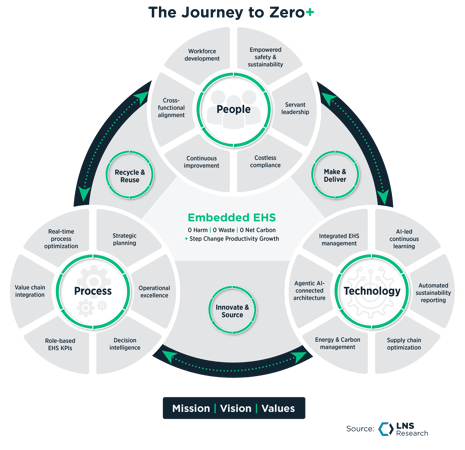
Figure 3: Leaders, having adopted Embedded EHS, have proven
safety, sustainability, and product stewardship is a profit lever
Jana Gessner, PepsiCo Global SVP EHS, spoke about building a proactive EHS culture across global operations at this year’s LNS Research Pathfinders event. With efforts creating a 'Beyond Zero — Pursue Positive' vision that aligns the organization towards common goals to include an incident-free workplace while promoting a positive impact on the health and well-being of employees and communities. By 2023, the “Courage to Care” mindset allowed PepsiCo to drive lost time incidents to less than 0.5 per 200,000 hours worked, 40%+ lower than the industry average and around 30% lower than goods-producing peers.
LNS Research has shown that even the most robust systems cannot overcome weak leadership. Without executives who model safety ownership, embed KPIs into line management, and link employee safety to the broader business strategy, improvement efforts stall before they scale. Embedded EHS starts with a strong vision like PepsiCo’s that gains workforce buy-in, requires access to critical data for proactive measures, and leverages tools that dynamically adapt to both employee and business needs (Figure 4).
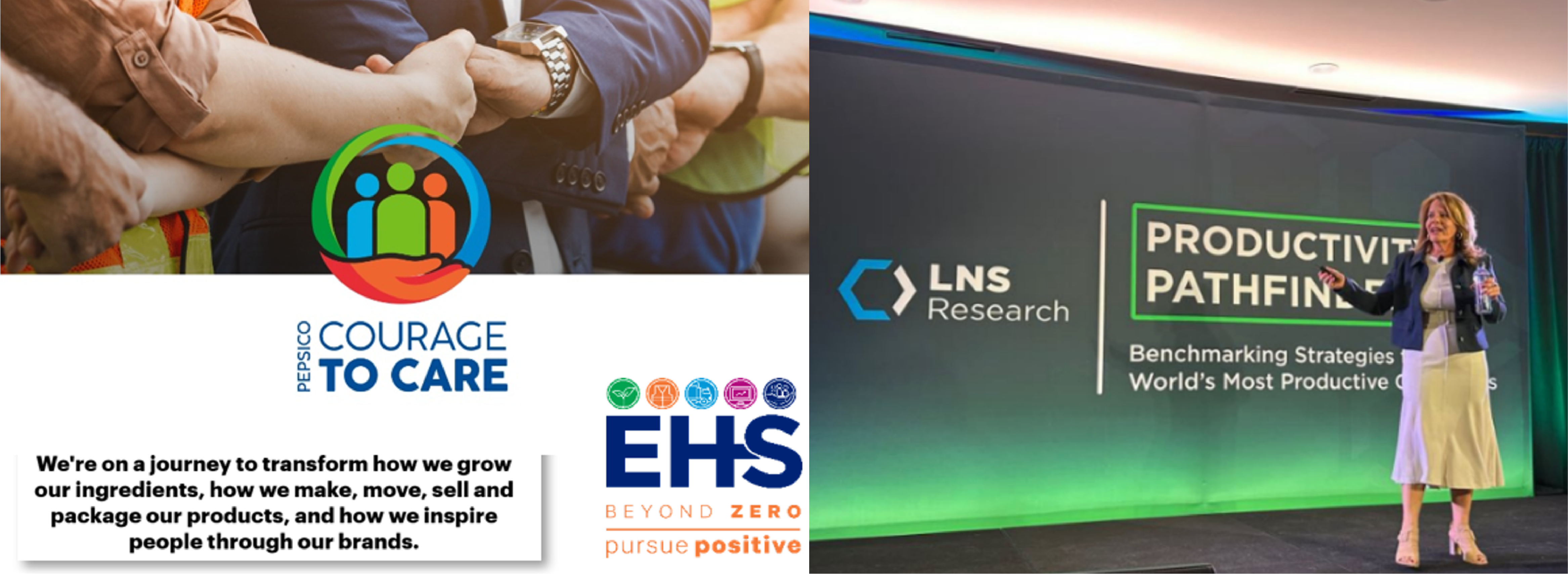
Figure 4: PepsiCo Global SVP EHS, Jana Gessner, has adopted
a “Beyond Zero — Pursue Positive” vision for Embedded EHS
Recommendations for CSOs and Global Heads of EHS
The focus on compliance isn’t keeping workers safe across manufacturing, and neither will the traditional methods that add more checklists or technology. It requires reframing EHS as a core driver of resilience, agility, and business value. CSOs and Global Heads of EHS are uniquely positioned to partner with COOs and drive this change.
To improve worker and product safety, CSOs and Global Heads of EHS must focus on these priorities:
-
Building Engaged Leadership: Create a leadership-driven culture where EHS influences daily operations, and the sustainability vision shapes business strategy (Figure 4). Executives must set clear expectations, model leadership behavior, and prioritize effective communication to create a safety culture that empowers employee coaches and accelerates lifecycle innovation.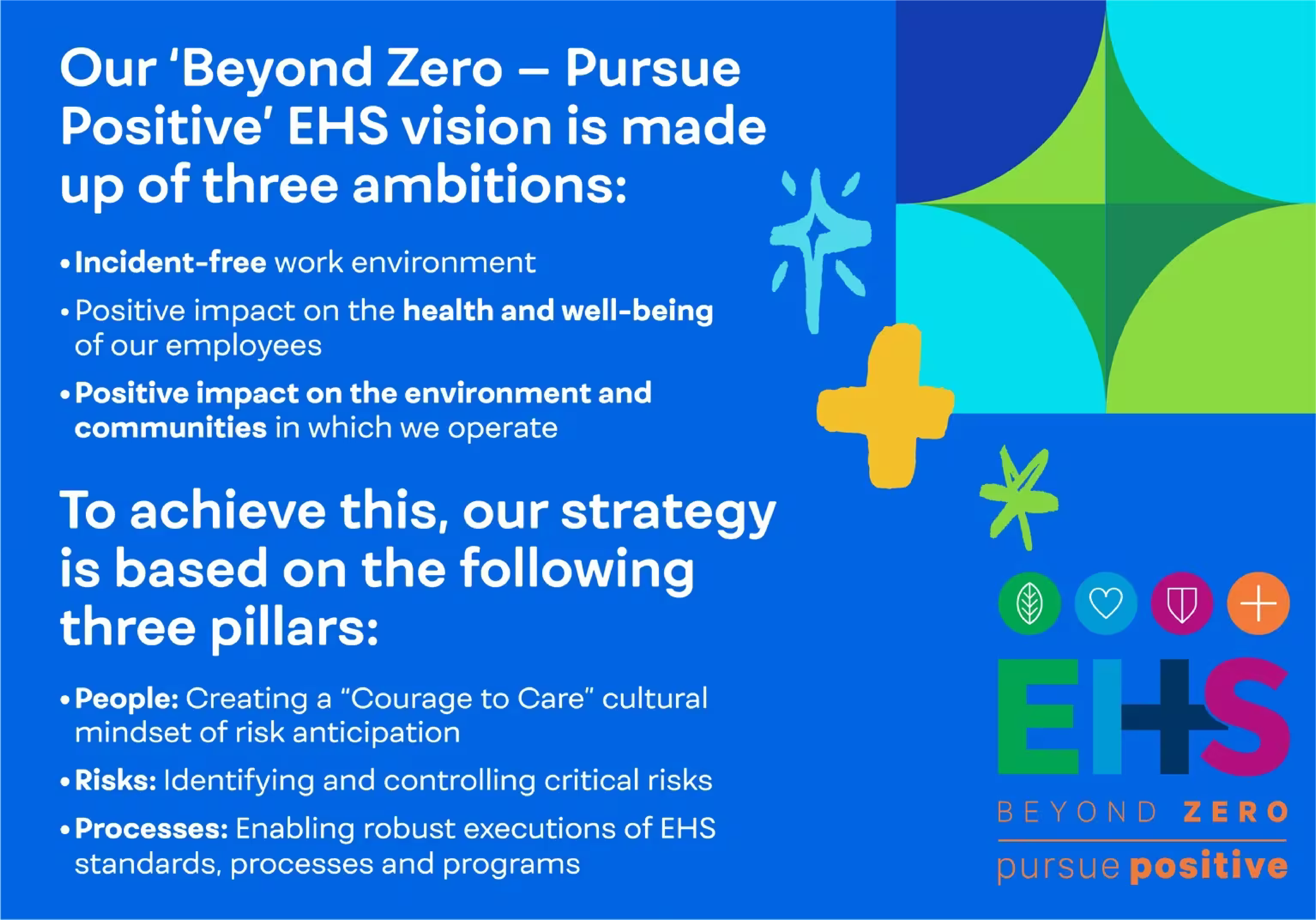
Figure 5: PepsiCo is embedding EHS into all operating
functions and strategies with a “Courage to Care” mindset
-
Enhancing Decision Intelligence: Turn enterprise data into intelligence with modular, configurable, and Industrial AI-embedded EHS software that enhances employee competency, promotes reporting, and automates sustainability reporting. Moving to an Agentic AI-connected architecture allows operations to shift from reactive compliance toward predictive and preventive risk management that ensures safety across the product lifecycle.
-
Maturing AI-Powered Knowledge Management: Deploy processes and technology that capture, generate, evaluate, and organize insights to scale knowledge across the value chain. Focus on enhancing EHSS capabilities by adopting a system of systems approach that reduces risk at the point of work, supports real-time process optimization, and advances product stewardship.
-
Investing in Costless Compliance: Extend digital tools and automation at every level to bridge skills gaps, build compliance into the way of work, and extend supply chain visibility. Transform the EHS function by reimagining long-standing practices and incentivizing efforts that better protect people and deliver long-term corporate value.
With the Embedded EHS framework as a blueprint, executive leaders can transform EHS from a compliance burden into a corporate sustainability vision that fuels profitable growth for long-term competitive advantage.