Executives are in a race as Industrial AI is rewriting the rules of manufacturing leadership. As margins tighten and operations grow more complex, the winners won’t just be those who adopt digital tools first, but those who industrialize AI fastest and most effectively. Industrial Transformation Leaders, the top 29% of manufacturers leveraging digital technologies to drive step-change performance, have dramatically improved safety, quality, and profitability (Figure 1).
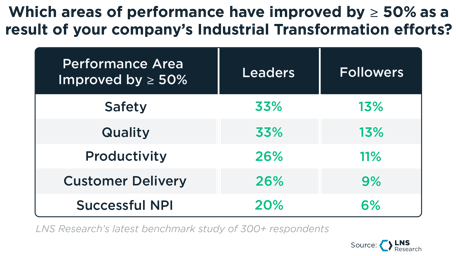
Figure 1: Leaders have dramatically improved performance
compared to Followers in every metric that matters
While safety and quality still define license to operate, what’s changing is how manufacturers must adjust traditional approaches as tenure declines to maintain safe operations and enable business growth. What sets Leaders apart is not access to better technology, but how Industrial AI is being adopted to run plants, support the frontline workforce, and empower people to make better decisions every day.
The payoff is more than just fewer incidents or improved first-pass yield. While Followers continue to experiment in isolated pilots, Leaders are building integrated, AI-enabled operating systems for manufacturing to enhance safety, ensure quality, and automate critical capabilities that standardize execution across the plant network for competitive advantage.
Deploying Agentic AI for Flawless Work
Most organizations have procedures and standards, but they’re often static, hard to access, and inconsistently applied. Agentic AI transforms antiquated approaches by turning knowledge into a living, interactive assistant that actively helps orchestrate work. Leaders are scaling AI-powered assistance faster, with 37% having already implemented Agentic AI in plants across the entire enterprise, as 40% of Followers have only budgeted for AI deployment (Figure 2).
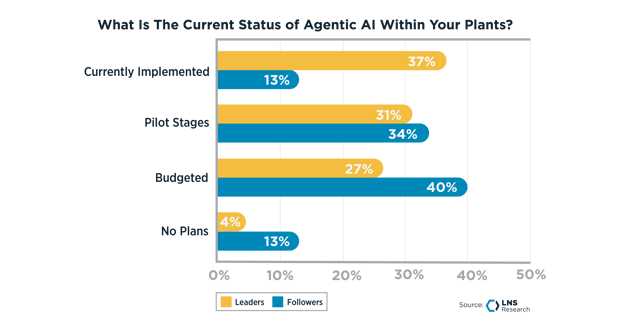
Figure 2: Leaders have leapfrogged ahead of Followers
in adopting Agentic AI across the plant network.
Manufacturers are facing one of the most historic losses of organizational knowledge ever experienced as 30-year veterans retire. Leaders are deploying Agentic AI as digital co-workers across the frontline to provide step-by-step instructions that guide workers through complex, infrequent, or safety-critical tasks so that newer employees can perform tasks as effectively as a more experienced colleague would.  For more tenured personnel, these agents are helping to adapt quickly as needs change by adjusting the guidance given based on real-time conditions that might include machine status, environmental data, or production priorities for improved agility.
In practice, this means “flawless work” is no longer an aspiration, but an outcome engineered into the system. Where human expertise is still essential, but backed by AI that anticipates potential issues, assists with follow-up actions, corrects missed steps, and proactively flags opportunities in real time.
Leveraging Automation Across Standardized Capabilities
Leaders have moved beyond piloting AI to systematically automate and standardize foundational capabilities across operations. This approach helps turn pockets of excellence and siloed best practices into a repeatable playbook that can improve plants across the entire network.
LNS Research found that compared to Followers, who may be automating workarounds, Leaders are leveraging automation on top of standardized processes. In fact, 90% of Leaders have already standardized more than a dozen capabilities at the business level or corporate-wide to support compliance, risk, and operations management. Leaders are increasingly adopting automation across capabilities, with over 50% having leverage automation to support 4 critical areas:
-
-
-
Training & Learning Management
-
Risk Assessment
-
Audit & Inspection Management
-
Work Performance & Task Support
Industrial AI has been critical in helping Leaders build a standardized and automated learning ecosystem that keeps skills current as processes evolve with automation, ensuring checks are completed reliably and on time to assess hazards consistently across plants. Frontline supervisors are supported with automated onboarding, point-of-work micro-learning, and role-based toolkits that reduce time-to-proficiency, ensure every worker is competent to perform any task assigned, and support delivering real-time insights to create a proactive posture. At the employee level, automated workflows assign, track, and verify actions to replace audit, inspection, and compliance paper trails with structured, closed-loop execution.
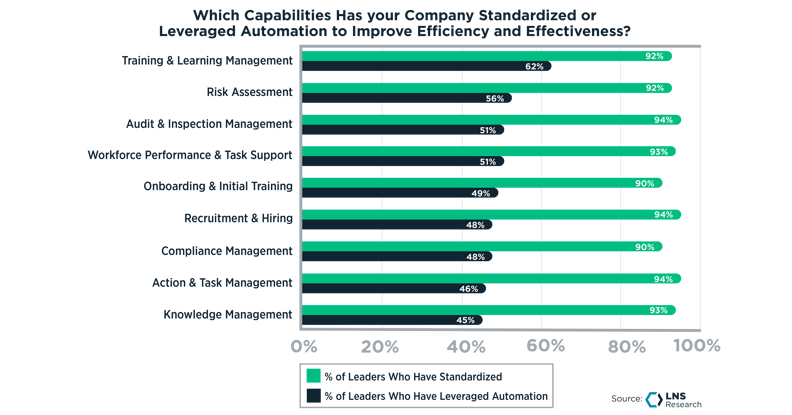
Figure 3: Leaders are standardizing and automating foundational
capabilities to support safety, quality, and competitive advantage
Leaders are already operating on a more scalable digital foundation that creates cleaner data, more predictable outcomes, and an infrastructure that’s ready for more advanced Industrial AI use cases. In fact, the latest insights from LNS Research show that data quality through the application of Industrial AI is a top driver of success in creating competitive advantage.
Enterprise Analytics and Improved Data Access for Better, Faster Decisions
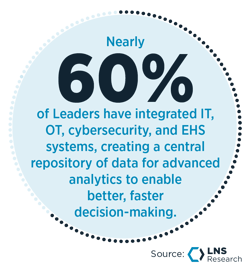 Leaders have shown that the true power of Industrial AI is only realized when data is accessible, trusted, and actionable for the people closest to the work. Compared to their peers, Leaders know that sophisticated models won’t move the needle if insights are trapped in dashboards that frontline teams never see or can’t interpret in time. Leaders have been strongly focused on unifying data across plants and functions, bringing together operations, EHS, quality, maintenance, and HR data into a common analytics layer that can shift a reactive culture to a more proactive posture.
To support safety, quality, and productivity, Leaders are transforming raw signals into enterprise analytics and actionable insights. Table 1 shows how Leaders are maturing their advanced analytics capabilities and decision-support tools to provide early warnings of workforce fatigue or skills gaps, prioritize risks, and monitor leading indicators to prevent quality escapes. Frontline supervisors can quickly rebalance labor as production demands change, adjust schedules while ensuring compliance, and re-prioritize work orders based on real-time conditions, while plant leadership can see the impact of AI-enabled workflows on safety, quality, and productivity across sites, and replicate what works.
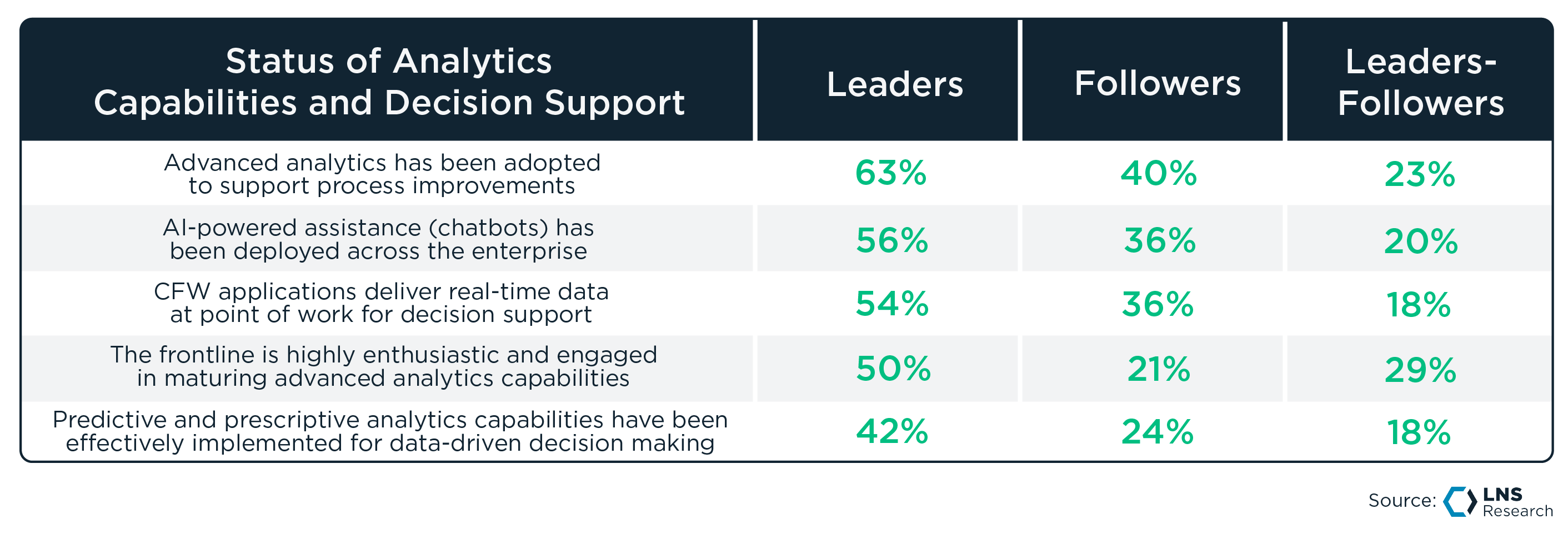 Table 1: Advanced analytics efforts for Leaders focus on better, faster decisions
Leaders are investing in enterprise analytics support, improved data access, and Industrial AI as a practical tool at every layer of the organization, enabling faster, closer-to-the-action decisions that directly drive performance improvements, as shown in Figure 1, and a competitive advantage over Followers who are lagging.
How Manufacturing Leaders Can Implement Industrial AI to Accelerate Costless Compliance
The race is on. Executive leadership will be key in creating an environment that proactively shares knowledge to ensure employees at every level are equipped with the right skills, capabilities, and technologies. The question is no longer if you will adopt Industrial AI, but:
-
-
-
How quickly can you build the foundations and employee engagement that Leaders already have
-
How you’ll upskill employees to improve digital skills and competency
-
And how soon can you move from pilots to a new, AI-enabled way of running the plant every day, on every shift
 COOs must build a strategy that can accelerate employee competency and new ways of working across the frontlines as workforce dynamics rapidly change. The following recommendations can help executives drive collaboration, accelerate transformation efforts, and sustain step-change performance improvements:
-
Position AI, analytics, and automation as enablers, not the goal. Unlike Followers, Leaders overwhelmingly set strategic objectives focused on accelerating digital transformation for advancing workplace safety and health, optimizing resources, and improving sustainability. Build a strategy where workers trust AI adoption will accelerate mutual growth and success.
-
Don’t rely on technology investments. Leaders aren’t just investing in the latest technologies; they’re taking very specific actions to create a digital backbone for real-time optimization. Manufacturers must shift to an operating model where decision-ready information at the point of work allows employees to re-architect how work gets done.
-
Invest in AI agents as personalized assistants. Followers focused on lagging metrics remain reactive, while Leaders have embraced tools that drive business outcomes and keep goals aligned across teams. Scope Agentic AI efforts beyond chatbots and guided work support to role-specific tools that provide AI-informed recommendations and implement feedback loops.
-
Foster automation for work orchestration. Leaders have leaned into automated audits, inspections, and scheduling efforts with built-in tools for capturing evidence automatically, seamlessly updating standards, and facilitating more effective root cause analyses. Shift thinking towards closed-loop systems that drive ownership, consistency, and collaboration.
-
Align talent pipelines with operational needs. Empowering employees at all levels with workforce performance and task support, problem-solving tools, and ways to improve and innovate has instilled daily habits that advance both personal and business goals. Evolve roles and responsibilities, decision rights, skillsets, and hiring workflows to create a culture that rewards positive interventions and knowledge sharing that sustain improvement efforts.
COOs can jumpstart their Agentic AI journey, key to crossing the competency chasm, by diving into the LNS Research “Retooling Knowledge Management to Accelerate Workforce Competency” Transformation Blueprint.