Operational Excellence leaders rarely struggle to secure investment in capability development. Organizations continue to expand Lean academies, certification programs, and structured problem-solving workshops. Every year brings another cohort of Green Belts, supervisors trained in daily management, and practitioners introduced to an increasingly sophisticated collection of improvement methods. According to the Manufacturing Institute, US businesses spend nearly $32 Billion on training every year. If training in continuous improvement methods is only estimated at 5% of that, that totals over $1.5 Billion spent every year just on CI training in the US.
Despite this sustained investment, enterprise performance often follows a familiar trajectory. Improvement initiatives begin with executive sponsorship and visible enthusiasm. Early projects produce encouraging results and reinforce confidence in the program. As time passes, urgency shifts elsewhere, operational pressures return, and the same recurring problems begin to consume leadership attention. The response frequently centers on additional governance, greater process discipline, and another round of training.
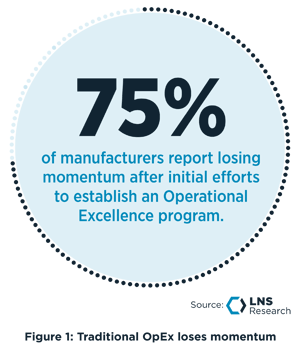
This pattern reflects a reasonable instinct. Organizations invest in their people because capability matters. Yet capability alone does not determine how work is executed every day. Daily decisions are shaped by governance, incentives, organizational priorities, and the architecture through which work moves across the enterprise. Our research consistently shows that approximately three-quarters of Operational Excellence initiatives lose momentum before becoming embedded in normal operations (Figure 1). As practitioners rotate into new roles and experienced leaders leave the organization, many Operational Excellence Leaders find themselves on the hamster wheel, managing recurring training cycles while having limited time to sustain performance improvements.
Training develops knowledge. Sustainable performance depends on how organizations organize work, transfer knowledge, and reinforce decision-making over time.
The Training Trap
Many Operational Excellence systems were designed for an industrial environment characterized by stable workforces, well-defined responsibilities, and predictable production rhythms. Organizations developed internal experts, deployed proven methodologies, completed improvement projects, and repeated the process across additional facilities. The assumption underlying this model was straightforward: as more employees learned the methods, organizational capability would naturally expand.
Today's operating environment is considerably different.
Today, organizations train more employees than ever, yet four persistent patterns remain.
-
Organizations struggle to shift from inspection to prevention.
-
Cross-functional ownership remains shallow.
-
Frontline capability fails to scale.
-
Focus fragments under overlapping initiatives.
Manufacturing organizations contend with accelerated product development cycles, higher workforce mobility, expanding digital ecosystems, and increasing organizational complexity. Under these conditions, several challenges remain, regardless of how much training is delivered.
The Persistence of Inspection
Executive teams consistently position prevention as a strategic priority. They seek fewer defects, fewer safety incidents, and fewer quality escapes. However, operational performance trends suggest a different reality. Safety incidents are rising. Product quality has declined to levels not seen in more than seven years (Figure 2). Despite substantial digital investment, productivity growth remains under pressure.
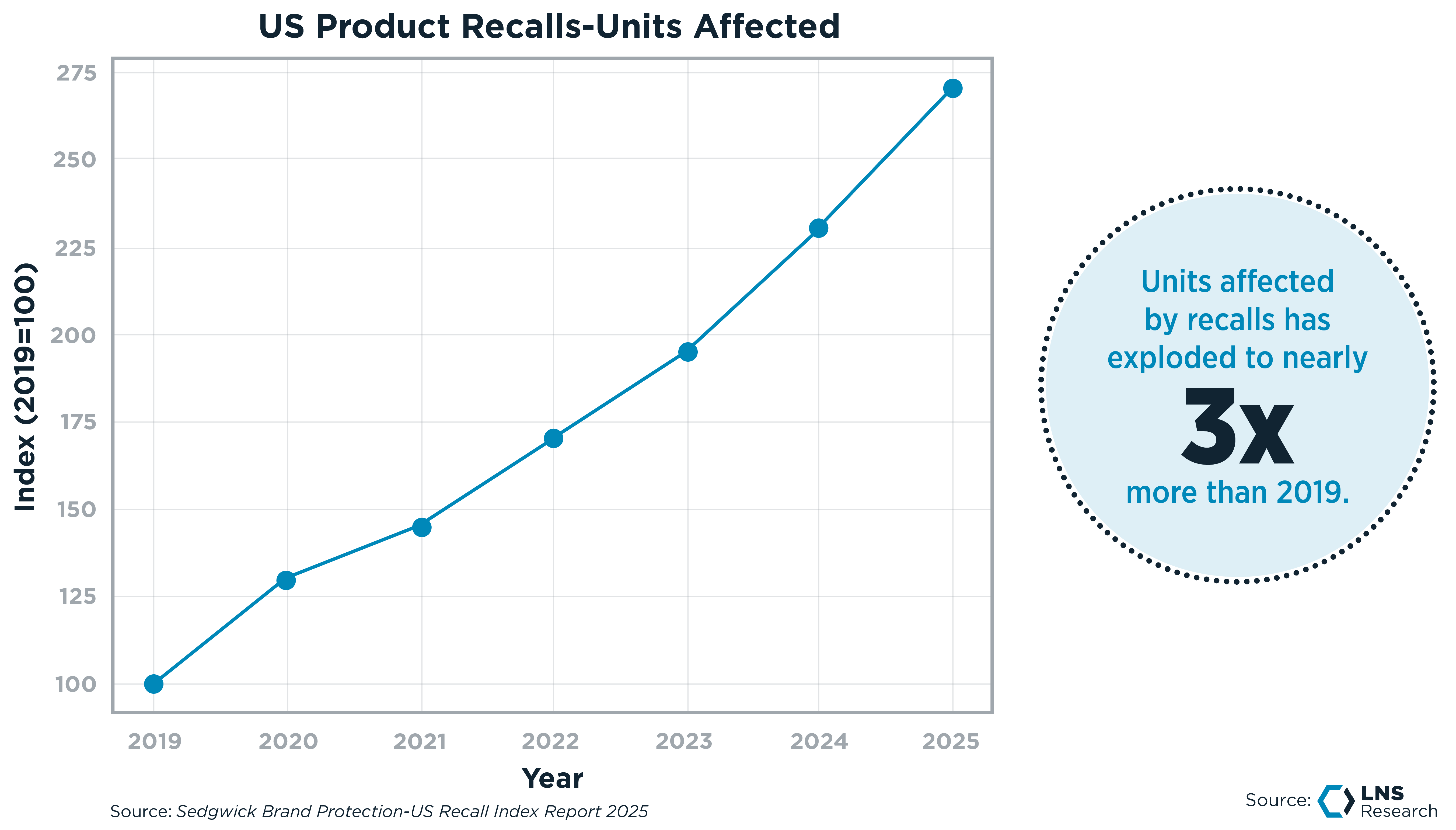
Figure 2: Inspection is failing manufacturers
Dashboards emphasize detection. Leaders celebrate crisis recovery. Resources flow toward late-stage checks rather than upstream design stability.
Employees understand prevention principles. They have completed the training. They observe that firefighting gets attention, while proactive design receives limited visibility. Training cannot override a system that rewards reaction. Culture follows what leadership measures and reinforces.
Enterprise Alignment Requires Shared Ownership
Operational Excellence is often a specialized function. It may report through manufacturing, quality, EHS, or a centralized Continuous Improvement organization. Engineering, supply chain, finance, and commercial functions maintain their own objectives, operating rhythms, and performance measures. Frontline employees often encounter improvement initiatives as an additional responsibility layered onto existing work.
Cross-functional training sessions introduce a common vocabulary, but organizational alignment depends on shared accountability. Lasting improvement requires common decision processes, coordinated performance measures, and governance structures that clarify how trade-offs are resolved across functions. Enterprise performance improves when ownership extends beyond departmental boundaries and becomes embedded within the operating model itself.
When ownership remains distributed across functions, organizations can also struggle to integrate the many improvement efforts competing for attention.
Fragmented Initiatives Dilute Organizational Focus
Performance challenges often prompt organizations to adopt a new methodology or initiate a transformation initiative. Lean expands into Lean Six Sigma. Digital transformation programs establish their own governance. Safety organizations deploy separate improvement frameworks. Quality organizations introduce additional compliance initiatives. Each effort brings valuable practices, yet each also introduces its own language, metrics, and reporting structures.
Without deliberate integration, the organization accumulates multiple systems competing for attention. Meetings increase, dashboards multiply, and employees navigate overlapping expectations. The resulting complexity reduces organizational focus and slows execution. Over time, this accumulation becomes a form of Organizational Debt that consumes management attention while limiting enterprise agility (Figure 3).
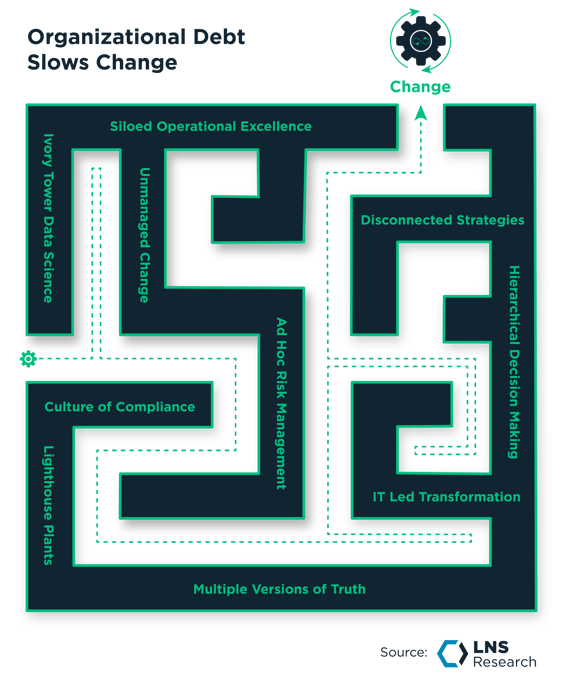
Figure 3: Organizational Debt is Headwinds
Operational Excellence as the Architecture of Work
Many leading industrial organizations, such as General Motors, Raytheon, Haier Appliances, and ITW, are expanding the role of Operational Excellence beyond the deployment of methodologies. It increasingly serves as the architecture through which work moves across the enterprise.
In many organizations today, work progresses through disconnected emails, spreadsheets, stand-alone applications, and informal conversations. Ownership changes hands repeatedly. Escalations depend upon personal relationships. Information exists in multiple locations, making it increasingly difficult to maintain confidence in operational data.
A work orchestration approach establishes clear decision pathways, defined responsibilities, and standardized workflows that extend across functional boundaries. Digital platforms provide visibility into operational performance, risk, and priorities while reinforcing consistent execution. Escalation paths become predictable because decision authority is explicitly defined.
As organizational clarity improves, teams spend less time navigating process uncertainty and more time executing improvements. Decision velocity increases because the operating system itself supports timely action.
Building an Organizational Knowledge Reservoir
Industrial organizations have experienced a substantial workforce transition during the past decade. Many experienced practitioners have retired while newer employees assume increasingly complex responsibilities. Traditional apprenticeship models no longer provide sufficient scale for transferring operational knowledge.
Operational Excellence serves as the organization's knowledge reservoir by capturing process intelligence, decision history, operational learning, and proven improvement methods within the systems employees use every day. Modern digital platforms make contextual guidance available at the point of work, connecting knowledge directly to execution rather than storing it in static documentation. Here at LNS Research, we call that the Dynamic, Decision-Oriented Operating Model (Figure 4).
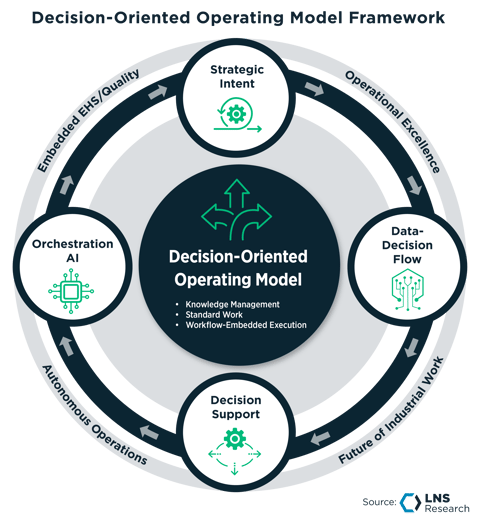
Figure 4: Work Orchestration through Decision Orientation
When organizations systematically preserve and reuse operational learning, capabilities expand across facilities and generations of employees. Leaders gain greater visibility into enterprise-wide patterns, enabling earlier intervention and more consistent execution. Improvement begins to compound because organizational learning becomes cumulative rather than episodic.
Recommendations for Operational Excellence Leaders
-
Redesign decision processes before expanding training budgets. Identify where decisions slow, where ownership becomes unclear, and where confidence in operational data declines.
-
Consolidate methodologies into a coherent operating model. Develop a unified operating model that integrates improvement methodologies into a coherent management system with shared priorities and consistent governance.
-
Institutionalize best practice capture and reuse. Embed successful improvements into workflows, digital systems, and organizational standards so effective practices remain in place as personnel and priorities evolve.
-
Build a living knowledge reservoir that captures operational learning, provides contextual guidance at the point of work, and strengthens enterprise capability over time.
Operational Excellence has always depended upon capable people. The next stage of its evolution depends upon creating operating systems that preserve knowledge, coordinate work, and reinforce effective decisions every day. Organizations that strengthen this foundation will find that capability grows through execution itself, making improvement a durable characteristic of the enterprise rather than a recurring initiative.