Enterprise Quality Management System (EQMS)
Cost of Poor Quality Definition
LNS Research discusses the importance of the Cost of Quality Metric in monitoring and improving manufacturing capabilities.

In a recent blog post on Enterprise Quality Management Software, we examined how measuring and minimizing the Cost of Quality (CoQ) was one of the many benefits of EQMS. In that post we also took a deep dive into how to measure and gain business value from the Cost of Quality metric. However, we neglected to give a formal Cost of Quality Definition.
There are many different definitions of the Cost of Quality available, and many are lacking in scope or precision. Often these definitions have not kept up with the times and don't account for software costs, supply chain interactions, or more. To remedy these shortcomings, we thought building on one of our favorite definitions (provided by ASQ, an organization we respect and support at LNS Research) would be a good starting point for this post.
At the highest level, there are two different terms in the Cost of Quality equation: the Cost of Good Quality (CoGQ) and the Cost of Poor Quality (CoPQ). This can be understood in the below formula:
CoQ = CoGQ + CoPQ
Let's start wit the Cost of Poor Quality. These are the traditional quality costs companies measure. Examples would include scrap, rework, and returned materials. To give this part of the equation more structure, we think of Poor Quality costts as having two different terms: Internal Failure Costs (IFC) and External Failure Costs (EFC). This can be understood by the following equation:
CoPQ = IFC + EXC, where:
IFC = Scrap Costs + Rework Costs
EFC = Returned Product Costs + Warranty Costs + Product Recall Costs
When it comes to the Cost of Good Quality, these are the costs that are much less likely to be measured by a company. Generally, these are the costs companies incur to ensure they are producing quality products. Again we break the Cost of Good Quality calculation into two different terms: Appraisal Costs (AC) and Prevention Costs (PC).

Appraisal Costs are the costs associated with measuring, evaluating or auditing products or services to assure conformance to quality standards and performance requirements. Activities that fall into this category include: Inspections, Testing, and Calibration. To measure these costs it is helpful to break them down into 3 broad categories: percentage of Employee Costs, percentage of Software Costs, and percentage of Equipment Costs devoted to these activities.
Prevention Costs are the costs associated with all activities specifically designed to prevent poor quality in products or services. Activities that fall into this category include: Quality Planning, Risk Management, Continuous Improvement Team Activities, Corrective and Preventive Actions, Audit Management, and more. Again, to measure these costs it is helpful to break them down into 3 broad categories: percentage of Employee Costs, percentage of Software Costs, and percentage of Equipment Costs devoted to these activities.
This can be understood by the following equation:
CoGQ = AC + PC, where:
AC = % of labor, software, and equipment costs focused on appraisal activities
PC = % of labor, software, and equipment costs focused on prevention activities
Although it goes beyond just the Cost of Quality model, it is worth noting that the Cost of Quality equation is not linear. For those of us that maybe didn't finish four semesters of calculus, this means that increasing the Cost of Good Quality by $1 does not mean the Cost of Quality also increases by $1. In fact, sometimes the opposite is true.
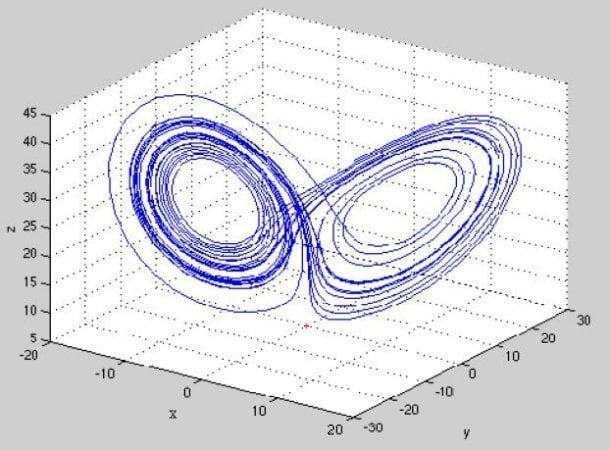
For example, investing $1 in a new piece of calibration equipment or software is an addition of $1 to the CoGQ but it could also result in a lower scrap rate which could lower the COPQ by more or less than $1.
It is for this reason that it is important to continually measure the CoPQ, CoGQ, and CoQ so that investments in the CoGQ can be justified by subsequent reductions in CoPQ and the overall CoQ.
The Cost of Quality formula will continue to be an area of interest and research at LNS Research, please follow this link and provide your email if you are interested in participating in or reading this upcoming research.
Join the webcast, on Thursday, June 16, 2016 @ 1:00 will provide senior leaders with best practices for building a business case around quality and the foundational framework needed to gain executive commitment.
LNS Research discusses the importance of the Cost of Quality Metric in monitoring and improving manufacturing capabilities.
Part 2 in a 5 part series describing the metrics like Cost of Quality that drive success in Enterprise Quality Management Software initiatives.
LNS Research discusses the cost of quality formula and its relationship with Enterprise Quality Management Software (EQMS) adoption