The frenzy around Industrial AI is surging across manufacturing, and the excitement is real. But so is the risk. With 76% of organizations focused on accelerating AI adoption and 53% expecting these initiatives to reshape how the business operates, the biggest variable in whether that investment pays off isn't the technology; it's whether the workforce trusts it enough to actually use it.
Chief Human Resource Officers (CHROs) are uniquely positioned to close that gap, but not in the way many AI transformation playbooks suggest. It isn't realistic, or credible, for a CHRO to define operational decision rights or engineer workflow thresholds; that work sits firmly with operations, and frontline teams won't look to HR for authority there. What is square in the CHRO's wheelhouse is building trust and change management, which determines whether frontline teams embrace AI or quietly resist it. Fear of job displacement remains one of the biggest silent brakes on adoption, and trust-building is the lever CHROs can pull that no other function can.
Among Leaders, 50% of frontline personnel report being highly enthusiastic about analytics and AI; among Followers, only 21% are.
Our Industrial AI research puts numbers on that fear. Among Followers, only 21% of frontline personnel describe themselves as highly enthusiastic about analytics and AI, while 49% say they're resistant or cautiously optimistic. Among Leaders — organizations with a track record of building trust and communicating transparently about AI's role — the numbers flip: 50% of frontline personnel are highly enthusiastic, and only 20% remain resistant. Although the technology deployed is often the same, what differs is whether people trust it, and trust doesn't happen by accident.
While accelerating AI can reduce tedious work, surface new opportunities, and increase productivity, it can also heighten employee fears, accelerate bad decisions, and drive the wrong outcomes. CHROs have a real opportunity in the age of AI to be the bridge between the technology and the workforce, building trust and communication that turn hesitation into engagement rather than trying to make decisions that live outside HR's charter.
AI isn’t the Risk; it’s AI Layered onto Outdated Operating Models
AI accelerates visibility, which sounds like progress until visibility turns into noise. Many deployments add alerts, dashboards, copilots, and more monitoring without changing who is empowered to decide, what thresholds trigger action, or how learning becomes the new standard. The results are predictable: teams see issues faster but are unable to act faster.
This is where culture does the real work. When an organization has a strong, trusting culture and a solid data foundation, AI is an accelerant for good; it speeds up what's already working. When trust is low and the data layer is fragmented, AI still accelerates, just the wrong things, faster: mistrust, noise, and bad decisions made with more confidence. CHROs don't own the data layer, but they do own the culture layer, which puts them at the center of which version of “accelerant” an organization gets.
Most manufacturers don't consciously diagnose decision rights or trust as the problem; those gaps are easy to overlook because they show up as friction, not failure. Competency gaps, by contrast, are visible almost immediately. That imbalance matters for CHROs: across manufacturing today, 57% of respondents describe an operating model where decision rights are unclear, layered in approvals, or slowed by governance and escalation rules that leave frontline teams hesitating out of fear of making mistakes with decision rights that allow employees to act faster without the fear of repercussions (Figure 1). Because these gaps are the ones least likely to be named without someone making them visible, they're exactly where a CHRO focused on trust can have an outsized impact.
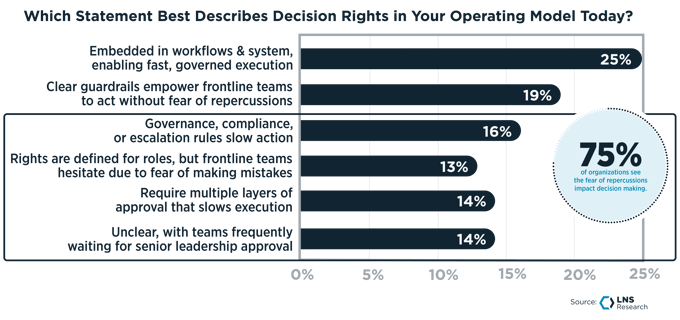
Figure 1: Over 50% of manufacturers report unclear decision rights, layers of
approval, and escalation rules create frictions that erode frontline trust.
This shows up in multiple failure modes as AI adoption accelerates:
-
AI-driven monitoring backfires when workers interpret it as policing instead of protection.
-
AI creates more signals than supervisors can triage, increasing cognitive load and burnout.
-
AI recommendations are not trusted because the data is fragmented across systems.
-
Escalation paths remain slow, so the organization improves detection but not response.
Applying AI to outdated operating models exposes real people-system gaps across manufacturing. When decision rights are unclear, supervisors hesitate. When competency is assumed, new hires improvise. When trust is low, teams ignore the signal or escalate everything. Fixing the systems themselves is operations' job, but none of those fixes stick if the workforce doesn't trust the effort behind them, and that's where HR's role begins.
Trust Is the Multiplier Leaders Have Already Found
Manufacturers are seeing delays in decision-making result in slower response times, increased injuries, more quality escapes, and added downtime, all of which lead to higher costs and problems that operations must solve. But Leaders separate themselves from Followers not just by redesigning workflows — they do it while building the trust that lets people actually use the new workflow with confidence.
Leaders are more than 4 times more likely than Followers to have embedded an enterprise operating model that uses AI to build workforce trust, close skills gaps, and empower frontline teams to act on signals.
LNS Research sees that the most successful organizations have focused on leveraging AI to empower employees, reduce friction in day-to-day work, and solve specific problems tied to corporate goals. The differentiator is not which AI tools have been adopted, but how the company has embedded practices that communicate core values, connect cross-functional support, and align employee effort to growth goals. Leaders start at the top, with executives strongly aligned to safety as a non-negotiable, while positioning AI to improve safety, quality, and day-to-day decision support for frontline teams.
Leaders are more than two times as likely as Followers to have HR engaged in developing Industrial AI governance and to have frontline personnel highly enthusiastic about analytics and AI (Figure 2). As a result, 65% of Leaders report being able to adapt and continuously evolve the enterprise operating model in response to changing conditions. The message to the frontlines has been distinctly different, with Leaders far more likely than Followers to communicate about AI truthfully as a way for the business to do more with less—not simply to do the same work faster.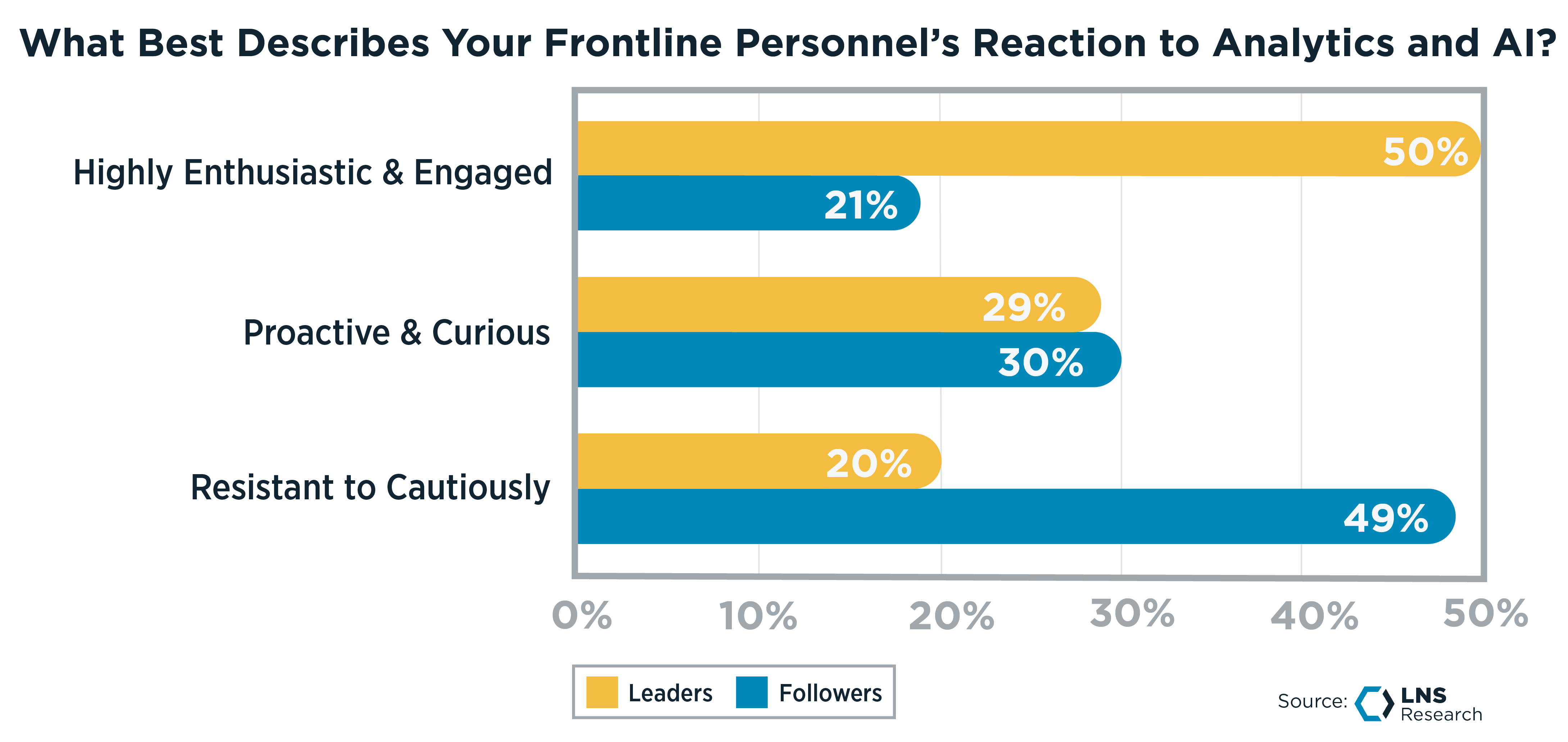
Figure 2: Leaders have been able to build trust and
strongly engage the Frontline in adopting analytics and AI.
Where CHROs Actually Move the Needle
Industrial organizations driving transformation and achieving accelerated returns are twice as likely to have a Virtual Operations Center strategy for cross-plant, analytics-enabled support for frontline decision-making and exception handling. HR isn't running that layer, but Leaders are almost twice as likely to have Human Resources engaged in these efforts as Followers, and are significantly more likely to involve EHS, Maintenance/Reliability, and Workforce Development as well (Table 1). That pattern tells us that CHROs are being pulled in for skills verification, career pathing, and change management, not for defining operational decision engineering, which understandably sits outside credible HR territory, to ensure the people asked to operate the new model are trained, supported, and have genuinely bought in.
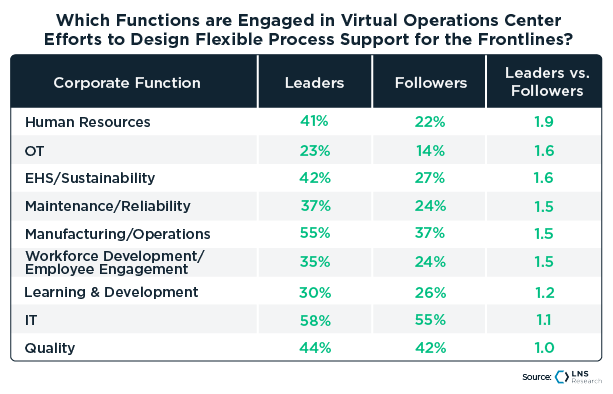
Table 1: Compared to Followers, Leaders are nearly 2 times more likely to have HR
included in the company’s Virtual Operations Center strategy to improve frontline support.
HR's clearest, most defensible role in AI transformation shows up in two places: how AI capability gets built, and how it gets adopted. Our Industrial AI research identifies eight specific actions that fall squarely within HR's charter.
Building AI Capability
-
Build role-based AI skills and literacy so the workforce can specify, test, and trust models.
-
Recruit and develop domain and data talent to close the skills gap that limits scaling.
-
Involve frontline users early to co-design workflows, producing better-fit tools and built-in ownership.
-
Capture expert know-how into the AI so tacit experience becomes training data and reusable IP.
Driving AI Adoption
-
Lead change management and communication so AI is seen as an augmentation, not a threat.
-
Wire AI usage into performance metrics, incentives, and recognition.
-
Reinforce new behaviors with embedded coaching, peer learning, and daily routines.
-
Partner on redesigning roles, decision rights, and safety practices, and secure HR a seat in AI governance.
None of these requires a CHRO to be fluent in operational decision engineering. They require a CHRO to be excellent at what CHROs are already accountable for: skills, culture, communication, and trust.
Recommendations for Manufacturing CHROs
Manufacturers must replace traditional approaches with more modern techniques to accelerate AI adoption. The key for organizations will be to ensure initiatives don’t create more noise by distracting workers from real risks, prioritizing incentives over outcomes, or accelerating burnout rather than advancing the long-term vision.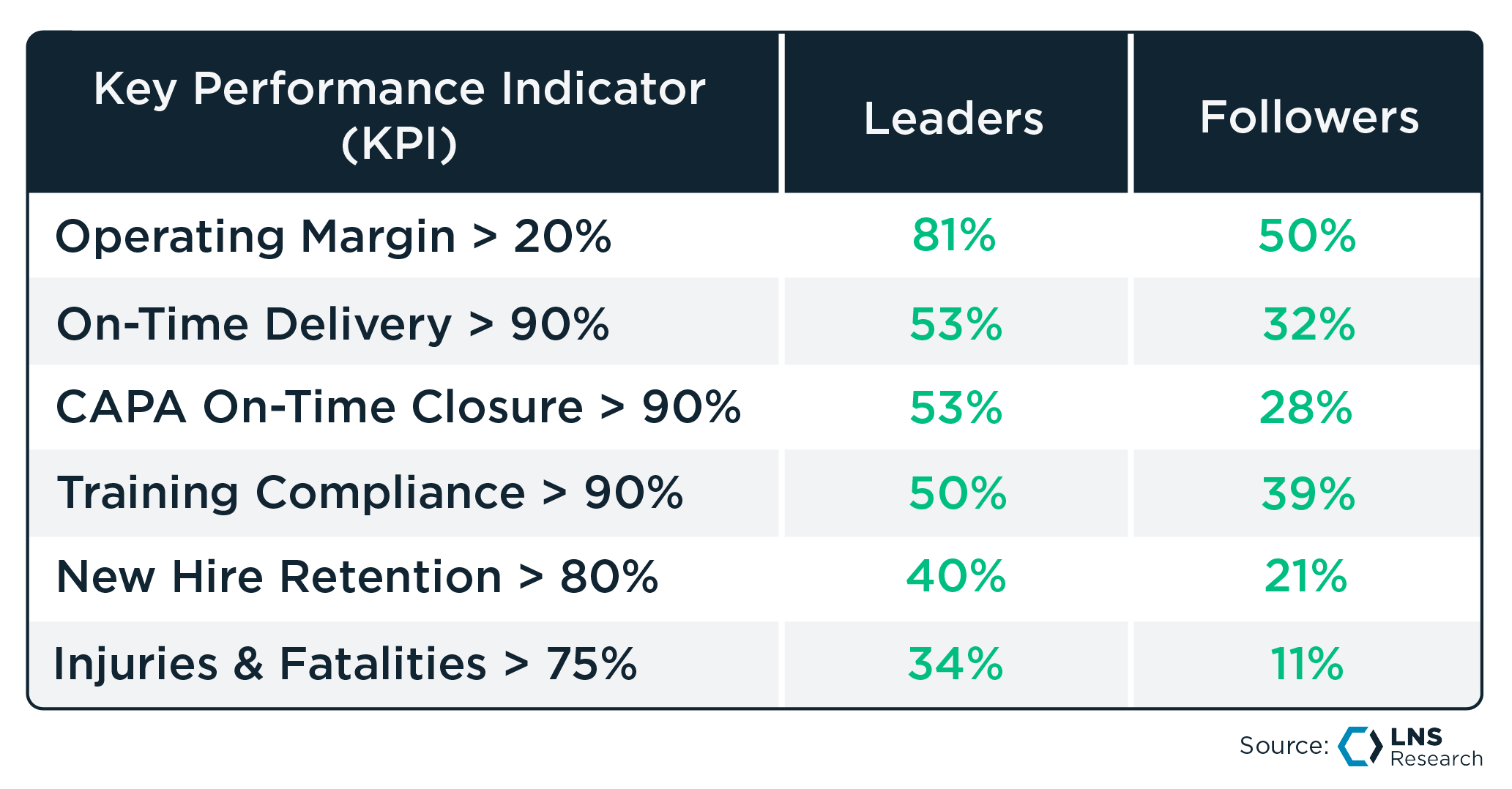
Table 2: Leaders have accumulated compounded
advantage over Followers with Industrial AI.
To achieve the same level of success as Leaders (Table 2), LNS Research offers the following recommendations to help CHROs turn AI adoption into a trust-building advantage:
-
Lead the trust conversation before the rollout, not after. Communicate honestly that AI is meant to augment work, not replace it, and back that message with visible proof points, redeployment, upskilling, and new roles, rather than reassurance alone.
-
Build AI literacy at every level. Ensure the frontline is included, and start with supervisors, so people have the confidence to question, test, and validate AI recommendations rather than mindlessly following or ignoring them.
-
Bring frontline users into the design process early. Co-designing workflows with the people who will use them builds ownership and produces tools people actually want to use.
-
Tie AI adoption to what people are measured and recognized for. If AI usage doesn't show up in performance conversations and incentives, it won't stick.
-
Reinforce new behaviors continuously. Embedded coaching, peer learning, and daily routines convert one-time training into a lasting habit.
-
Secure a seat at the AI governance table, partnering with operations on how roles, decision rights, and safety practices evolve; as a collaborator on change management, not the author of the operational rules themselves.
Leaders have used AI in ways that reduce the risk of employees feeling policed rather than protected, pairing new technology with genuine trust-building so people feel safe using it. That combination, not decision-engineering expertise, is what separates Leaders from Followers, and it's exactly where CHROs belong.
When CHROs anchor AI adoption in trust, communication, and capability-building — rather than in ownership of decisions that belong to operations — organizations scale AI in a way that reinforces confidence, competency, and the behaviors needed for long-term success. CHROs aren't the ones defining tomorrow's decision rights. They're the ones building bridges that get people to trust and cross into that future.