Compliance-centric EHS has produced diminishing returns at exactly the moment industrial risk is accelerating. With workforce tenure collapsing from a 30-year career to a 3-year job, fatalities have spiked since 2018 across manufacturing. Regulators, customers, and investors are demanding measurable performance improvements.
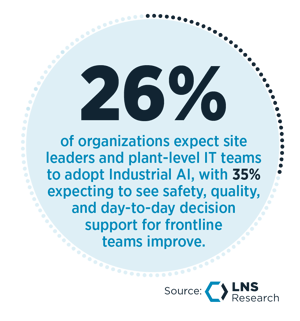 The Environment, Health, Safety & Sustainability (EHSS) software providers are seeing higher expectations to address this gap and provide AI-enhanced solutions to support the shift from legacy compliance architecture toward a platform that embeds safety and sustainability into the operating model. To accelerate the Journey to Zero Harm, Zero Waste, and Zero Carbon Emissions alongside step-change productivity growth, Chief Sustainability Officers must be able to differentiate between vendors that have added AI tools to a compliance foundation and those that are redefining the space with next-gen platforms built for an AI-driven future.
The Adoption Gap for Disconnected Operations and EHS Value
EHS software has evolved through three distinct waves: compliance recordkeeping in the early 2000s, sustainability reporting modules through 2022, and now a third wave fundamentally different in architecture and ambition. Yet LNS Research's Embedded EHS benchmarking research reveals a stark reality: only 20% of manufacturers have crossed the transformation chasm to deliver real corporate value from EHSS.
Half of all EHS programs remain stuck in the early vision-centric stages of transformation (Figure 1), with efforts that are reactive, siloed, and disconnected from operational decision-making. Accelerated transformation programs and a compliance-centric approach have left data scattered across EHS, maintenance, production, and HR systems, with legacy EHS platforms acting as a “system of record” rather than a platform for profitability.
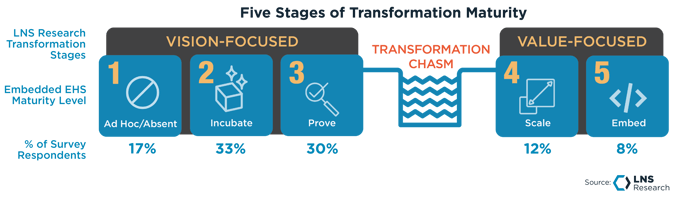
Figure 1: Only 20% of EHS programs are delivering real corporate
value with 30% positioned to cross the transformation chasm.
The good news is that 30% of manufacturers are positioned to pivot from the "Prove" stage, where established programs have built a strong foundation, toward a value-centric posture where scaling proven practices delivers real enterprise impact. Unfortunately, LNS Research has shown that audits and AI alone are not enough to transform safety and sustainability performance. Modern operating models and architecture have been key for EHS Leaders.
The Environment, Health, Safety, & Sustainability Framework
The EHSS ecosystem is not a standalone application, but an orchestration layer that connects EHS management systems across PLM, Safety Systems, HCM, CFW, SCM, MES/MOM, ERP, EAM, EQMS, and CRM (Figure 2). Leaders aren’t just achieving safety, quality, and productivity improvements; every integration point activated has delivered compounded value.
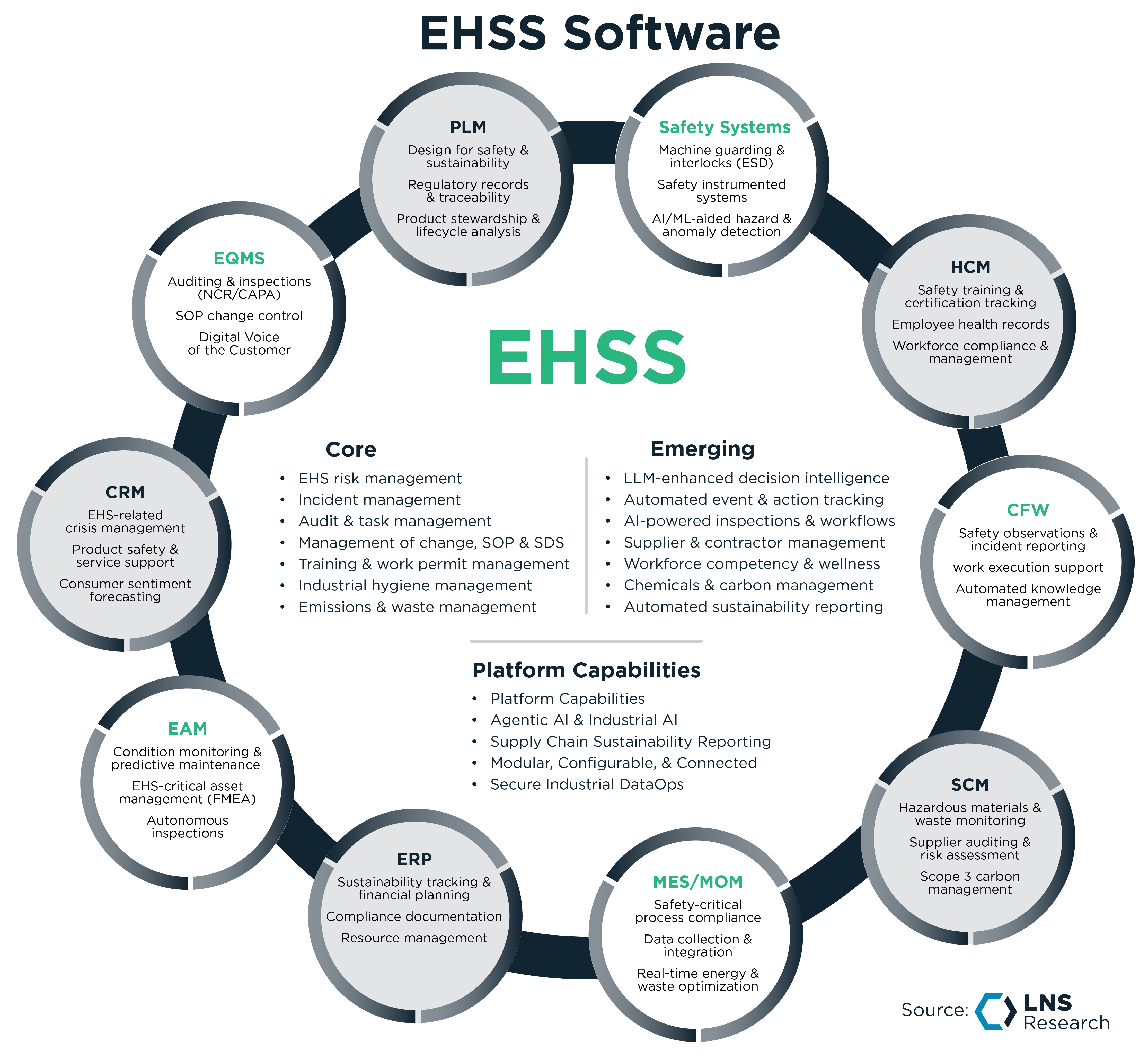
Figure 2: The EHSS framework for safer processes, innovative products,
and ensuring product stewardship that sustains competitive advantage.
Core Capabilities Most vendors can provide industry-specific offerings, productized solutions, and deployment support to cover this territory. The risk for CSOs is buying a compliance-first platform that cannot grow into the layers where competitive advantage lives. As the core is commoditizing, the roadmap becomes more important than ever.
Emerging Capabilities The market is fragmenting, and vendor bets are diverging sharply with differentiated systems embedding AI at the workflow level. This new approach visualizes risk for frontline workers and provides real-time, context-based safety recommendations, rather than having a supervisor react to a report or incident after the fact. As AI technologies advance rapidly, co-pilots are increasingly moving to workflow agents that sense, decide, and act within the systems people already use.
Platform Capabilities, Architecture, and interoperability are determining factors for either accelerating or stalling the integration agenda. Technology partners design systems to share insights and create enterprise intelligence that solves the problems they were purchased for, rather than proprietary models that lock data in siloes or behind layers. EHS platforms with modular, configurable solutions can scale a CSO’s ambition rather than becoming a ceiling on them.
Leaders are 2.4 times more likely than Followers to be integrating data across plant assets, business systems, and employees to deliver personalized insights proactively. With MES/MOM, EAM/CMMS, and HCM integration as a prerequisite, Leaders have pivoted traditional, paper-based processes into real-time operational controls. The EHSS ecosystem framework provides industrials with a roadmap for compliance automation, risk-based inspections, where:
-
-
-
AI-enhanced permit verification automates data collection to support proactive incident management,
-
Connected Frontline Workforce (CFW) applications provide LLM-enhanced decision intelligence to the point of work,
-
AI-embedded workflows across ERP, EQMS, and PLM solutions ensure product traceability from design to delivery.
Driving EHS Excellence with Interoperability and Solution Selection
AI is igniting a reawakening across manufacturing, redesigning operating models, leadership strategies, and workforce roles. Three distinct vendor archetypes have emerged in the EHSS market:
-
Compliance Core Players that dominate incident management and regulatory reporting with a focus on maintaining existing operations and AI-native capabilities for targeted industries.
-
Sustainability-First Entrants building toward automated carbon management and ESG reporting for industries with high Scope 3 exposure that improve supply chain transparency.
-
Integrated EHSS Platforms with core compliance capabilities and an open platform architecture that is evolving toward cross-functional orchestration across safety, quality, and sustainability.
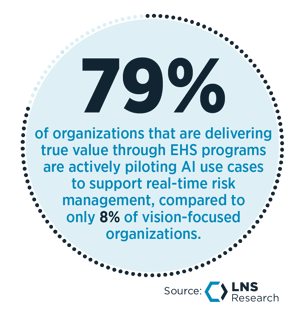 Solution selection requires a strong understanding of each vendor's architectural roadmap, integration capabilities, and long-term vision for an AI-connected Future of Industrial Work. Success often begins with executives who personalize sustainability commitments and tie performance management directly to EHS outcomes well before establishing a cross-functional team for solution selection. Mature organizations have focused on automating risk and compliance management and on providing robust cross-functional support solutions with AI-powered CFW applications to convert sustainability commitments into sustained competitive advantage.
Organizations like Owens Corning and Indorama Ventures, recognized among LNS Research's World's Most Productive Companies, are accelerating safety innovation by investing in Virtual Operations Centers that provide the frontlines with proven practices and AI-enhanced solutions that better plan work, assess hazards, and act on signals in real time to realize step change improvements across key performance indicators. Embedded EHS insights show how integrated IT, OT, cybersecurity, and EHS systems have been critical to moving towards an Agentic AI-connected architecture that improves safety interventions, automates decision-making, and empowers employees across the supply chain to achieve more sustainable, profitable operations (Table 1). The EHSS framework can help manufacturers prioritize capabilities and guide product evaluations beyond demonstrations, assessing each solution’s ability to support costless compliance, where regulatory adherence becomes a byproduct of how work gets done rather than a function layered on top.
Embedded EHS
Best Practice Capability
|
Value -Centric Adoption
|
Vision -Centric Adoption
|
▲Value
–
Vision
|
|
A Virtual Operations Center provides robust, cross-functional offerings for real-time collaboration on risk, reliability, and performance across sites, along with enterprise training and career development.
|
83%
|
9%
|
48%
|
|
IT, OT, cybersecurity, and EHS systems are integrated so that shop floor and EHS insights are accessible, timely, and trusted for decision-making.
|
84%
|
35%
|
21%
|
|
Connected Frontline Workforce (CFW) applications have matured, with capabilities and use cases scaled across the supply chain.
|
87%
|
17%
|
46%
|
|
Autonomous risk management ensures safe work by automating inspections, providing problem-solving support, and managing compliance.
|
90%
|
20%
|
34%
|
|
A balanced scorecard tracks role-specific performance across key EHS, operations, and financial metrics.
|
91%
|
17%
|
50%
|
|
Workforce and operational management capabilities are being automated to improve safety and drive total employee health.
|
92%
|
15%
|
50%
|
Table 1: How EHS Leaders and the World’s Most Productive Companies Embedded
EHS strategy converts safety and sustainability commitments into sustained advantage.
Selecting EHSS Software that Builds Durable Advantage
Selecting an EHSS platform is a strategic infrastructure decision, not a software procurement exercise. By focusing on vendors that do not just provide a proven platform and emerging technologies, but a suite of offerings that enhance existing capabilities, employee competencies, and AI-powered tools, organizations can embed safety and sustainability into daily practices that engage workers in driving step change performance improvements. Companies consistently delivering on growth goals have embraced Embedded EHS to shift compliance-centric programs into a value-focused strategy that better equips workers in an AI-driven future to redefine current ways of working and accelerate the Journey to Zero for safer, more profitable operations.
For CSOs and Global Heads of EHS navigating a crowded and rapidly evolving vendor market, LNS Research offers five selection principles:
-
Anchor the Business Case in Operational Outcomes. Quantify the cost of the status quo with metrics that track SIF exposure, incident-driven downtime, Scope 3 disclosure gaps, and workforce knowledge loss from attrition. Sustain executive approval by connecting EHSS to productivity, margin, and ESG performance simultaneously, not compliance cost avoidance alone.
-
Focus on Long-Term Ecosystem Fit. Treat compliance capabilities as a starting point, not a selection filter. Shortlists should identify vendors with differentiated industry expertise, proven integration across the existing tech stack, and demonstrate proof-of-concept for accelerating AI in the company's environment.
-
Evaluate Architecture, Not Just Features. Best-in-class incident management won’t overcome a closed data architecture that constrains system integration, CFW use cases, and AI adoption. Weight Industrial DataOps, open APIs, and modular configurability as heavily as functional features.
-
Select a Transformation Partner. Evaluate each vendor's co-innovation programs, Agentic AI roadmap credibility, and global implementation methodology. Choose a partner that is invested in helping cross the transformation chasm, not just deploying a platform that treats the Journey to Zero+ as a non-negotiable shared outcome.
-
Scale What’s Working with Emerging Capabilities. Standardize practices already proven across the enterprise first to extend compliance strengths and unlock cross-functional impact. Enhance existing capabilities with AI-powered inspections, real-time carbon management, and workflows that build workforce competencies.